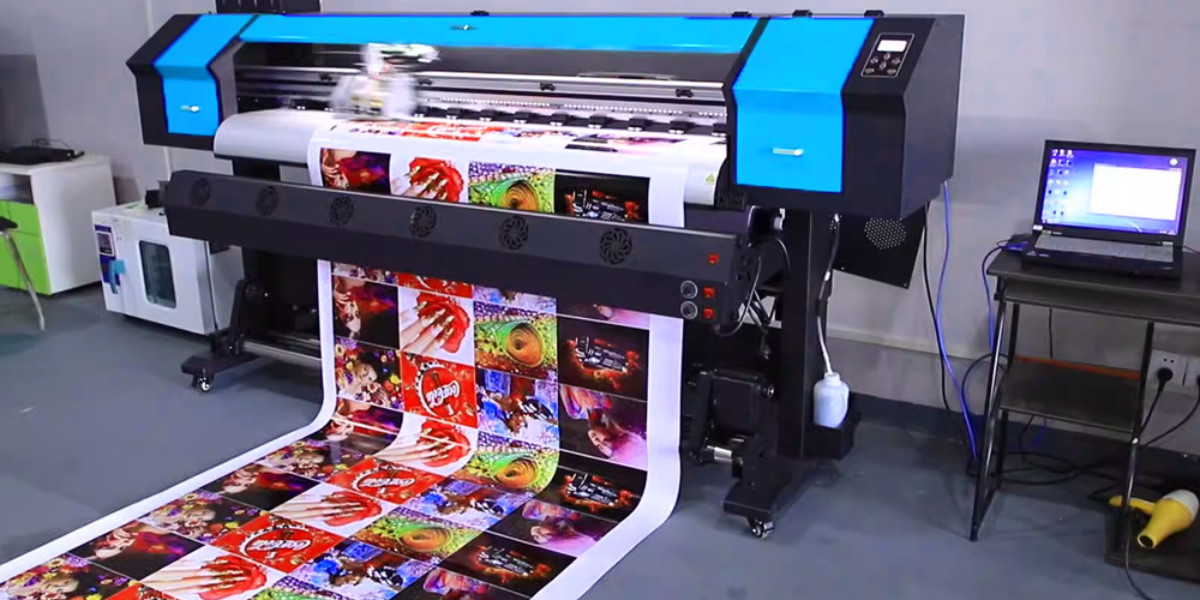

The landscape of photo printing is in a constant state of flux, driven by evolving consumer expectations and rapid technological breakthroughs. Staying abreast of the Digital Photo Printing Market Trends is essential for businesses aiming to remain relevant and for consumers seeking the latest in personalized products. Current trends indicate a decisive move away from the commoditized, low-cost print towards high-value, customized, and experientially rich products. The industry is being reshaped by the convergence of artificial intelligence, sustainability imperatives, and a shift in consumer psychology that values unique, tangible artifacts over mass-produced goods. These trends are not merely fleeting fads; they represent a fundamental restructuring of how we interact with our digital memories and convert them into physical legacies.
Trend 1: The Rise of AI-Driven Automation and Personalization
One of the most significant trends is the integration of Artificial Intelligence (AI) to automate the printing process. Gone are the days when creating a photo book required hours of manual sorting and layout design. Today’s leading platforms leverage AI to analyze a user’s camera roll, identifying the highest-quality images based on factors like facial expressions, focus, and composition. These algorithms can then automatically create themed photobooks—for a vacation, a child’s first year, or a holiday—with virtually no input from the user. This "zero-click" experience is a major trend because it addresses the primary barrier to printing: time. Beyond curation, AI is being used for automatic image enhancement, removing blemishes, improving lighting, and even colorizing old black-and-white photos, adding a new dimension to the archival market.
Trend 2: The Shift Toward Premium and Alternative Substrates
Another dominant trend is the move away from traditional paper prints toward premium, non-traditional substrates. Consumers are increasingly viewing photo prints as art pieces or integral parts of home decor. This has fueled explosive growth in the market for metal prints (which offer a modern, glossy finish and high durability), acrylic prints (which provide depth and a gallery-like appearance), and wood prints (which offer a rustic, organic aesthetic). This trend towards premiumization is also evident in framing; customers are opting for high-end, custom frames rather than generic ones. This shift is profitable for vendors, as premium substrates command significantly higher price points and margins than standard photographic paper, elevating the entire market from a low-margin commodity business to a higher-value creative service.
Trend 3: The Emergence of Social Commerce and "Shoppable" Media
Social media platforms are evolving from pure engagement tools into powerful e-commerce channels, giving rise to the trend of "shoppable" media. Platforms like Instagram and Pinterest are integrating print-on-demand services directly into their interfaces. A user can now see a friend’s photo book or a sponsored ad for a canvas print and, with a few clicks, replicate that product using their own photos without leaving the app. This trend capitalizes on social proof and impulse buying. Furthermore, influencers and content creators are launching their own branded merchandise lines using print-on-demand services, creating a new B2B2C channel that bypasses traditional advertising. This integration of social media and printing is streamlining the customer journey, drastically reducing the steps between inspiration and purchase.
Trend 4: The Convergence of Instant and Professional Printing
The lines between instant, consumer-grade printing and professional lab quality are blurring. Advances in consumer-level dye-sublimation and high-end inkjet printers have empowered individuals to produce gallery-quality prints at home. However, the bigger trend is the rise of mobile apps that offer "professional lab" quality with "instant" convenience. These apps allow users to order prints that are processed on professional-grade equipment but delivered with the speed of e-commerce, often within 24-48 hours. This convergence satisfies the consumer demand for high quality without sacrificing speed. Additionally, the trend of "hybrid" events (part virtual, part in-person) has created demand for instant printing services at events where professional photographers capture and print images on-site for guests, merging the event experience with a tangible keepsake.
Trend 5: Sustainability as a Core Design Principle
Sustainability has transitioned from a niche trend to a core industry principle. Modern consumers, particularly Gen Z and Millennials, are demanding eco-friendly options, and the market is responding with significant innovations. The trend is moving beyond simple recycling to encompass the entire lifecycle of the product. Companies are now using FSC-certified papers, plant-based or water-based inks, and plastic-free, biodegradable packaging. There is a growing trend towards "circular economy" models where companies offer to take back old frames or prints for recycling or upcycling. The print-on-demand business model itself is a major sustainability trend, as it virtually eliminates the waste associated with speculative printing. This focus on green practices is not just an ethical choice but a competitive differentiator that is increasingly influencing purchasing decisions.
Trend 6: The "Phygital" Experience and Augmented Reality
The integration of physical prints with digital experiences, known as "phygital," is a cutting-edge trend. Augmented Reality (AR) is at the forefront of this movement. Companies are developing apps that allow users to scan a physical print with their smartphone to unlock a digital layer—such as a video of the moment the photo was taken, a soundtrack, or a hidden message. This transforms a static photo into an interactive memory capsule, bridging the gap between the physical and digital worlds. AR is also being used in the pre-purchase phase; customers can use their phone cameras to see exactly how a canvas or frame will look on their wall before ordering. This reduces buyer's remorse and increases confidence in high-value purchases, driving sales of premium products.
Challenges and Risks in Adopting New Trends
While these trends offer significant opportunities, they also present challenges. The shift to AI and automation requires substantial investment in software development and data science, which can be a barrier for smaller players. The trend towards premium substrates increases the complexity of supply chains, as specialty materials like metal and acrylic require different handling and fulfillment processes. Furthermore, the "phygital" trend raises questions about long-term digital support; if the AR platform shuts down, the enhanced functionality of the physical print is lost. Companies must ensure that their digital integrations are built on sustainable, long-term technology stacks. There is also the risk of "trend fatigue," where consumers become overwhelmed by constant innovation and long for simplicity, creating a niche market for straightforward, no-frills printing services that co-exist alongside high-tech offerings.
Future Outlook and Investment Opportunities
Looking to the future, these trends suggest a market that will be increasingly personalized, automated, and sustainable. Investment opportunities are ripe in companies developing proprietary AI curation software that can be licensed to larger printing platforms. There is also significant potential in the development of new, sustainable substrates that offer the same quality as traditional materials without the environmental impact. The "phygital" space presents opportunities for companies that can create robust, user-friendly AR platforms that add genuine value to the physical print. For investors, the key is to look for companies that are not just following trends but are setting them—firms that demonstrate a deep understanding of the intersection between technology, consumer psychology, and environmental responsibility.
Conclusion
The trends shaping the digital photo printing market reflect a broader societal shift towards personalization, quality, and sustainability. From the automation of creative processes through AI to the adoption of premium materials and the integration of digital experiences with physical products, the industry is innovating at a rapid pace. These trends are redefining what a photo print can be, transforming it from a simple snapshot into a sophisticated piece of art, a sustainable gift, or an interactive experience. As the market continues to evolve, those who embrace these trends—particularly in AI, sustainability, and social commerce—will be best positioned to capture the imagination and wallets of the modern consumer.
Get complete access through our multilingual pages—JA, DE, FR, KO, CN, and ES