
Understanding the Foundation of Modern Flexible Packaging
The transportation of food products from manufacturing facilities to consumer kitchens has evolved dramatically as flexible packaging materials have become increasingly popular. Traditionally, food manufacturers have used a variety of forms of traditional packaging, including large heavy glass jars, thick metal cans and large bulky cardboard boxes. Now, however, there are many food packaging professionals who are utilizing soft-sided polymer web materials that allow them to conform to nearly every type of food product. There are two primary reasons why food manufacturers are choosing to use flexible packaging over other types of packaging; the first reason is due to the development of low density polyethylene (LDPE), a type of thermoplastic resin that is manufactured using high pressure polymerization techniques with ethylene monomers. The molecular structure of LDPE is characterized by having multiple short and long side chain segments protruding from each of the individual polymer chain segments. Because of these protruding segments, the polymer chains cannot develop into a tightly packed crystalline structure. Therefore, the resulting sheets of LDPE are extremely soft, flexible and durable. Sheets of LDPE Shrink Film can be processed through extrusion processes to create either blown or cast film products with thickness variations ranging from very thin films like those used for packaging bread products, to thick heavy duty films used for protecting palletized loads during transportation. Once a sheet of LDPE film is placed over a product, it will conform to the product's shape without being forced to resist the contour of the product. Additionally, LDPE film will absorb impact energy during transit, while also providing a low weight-to-volume ratio for the package.
Superior Moisture Barrier and Product Preservation
Consumer & Industrial Packaging: One of the most significant issues that face both Consumer & Industrial Packaging manufacturers is providing protection against moisture penetration into the packaging, and/or maintaining adequate moisture levels within the packaging to prevent drying of the contents. Polyethylene offers an excellent option for protecting packaged goods against moisture due to its Non-Polar Hydrocarbon Backbone. The Non-Polar Hydrocarbon Backbone acts as a natural barrier to water. Therefore, if Fresh Produce, Baked Goods, Frozen Vegetables, or Hygroscopic Powders are sealed in a properly constructed Polyethylene Pouch, they will be protected against premature spoilage, clumping, or freezer burn. Furthermore, even if the packaged goods are stored in high-humidity coastal warehouses or in non-temperature controlled shipping containers, the packaged goods will maintain their intended texture and shelf-life. While Polyethylene does not allow most gases to pass through, specialized packaging engineers can selectively permit certain gases to pass through the Polyethylene to facilitate balancing the respiration rates of Fresh Agricultural Products while continuing to contain the moisture inside the package.
Exceptional Heat Sealability on High-Speed Production Lines
A flexible package can only function well if the seal used to close the package functions properly. One great benefit of using low density polyethylene is that it has excellent heat sealing capabilities. Since LDPE melts/softens at a very low temperature (around 115 degrees Celsius), the packaging machinery used to seal the package can create a strong/air tight seal quickly and without damaging the layers directly above/below the seal. Even when there are fine particles of dust/oil/liquid contaminants on the surface of the seal when the packaging is being processed in a fast vertical form/fill/seal operation, the molten polymer can flow around those particles to form a continuous/leak-free seal. Because of this, packaging manufacturers typically laminate/co-extrude a thin layer of low density polyethylene onto the inner surface of multi-layer pouches made from polyester/nylon/aluminum foil. Although the outer layer of the pouch provides structural support/printing surface/oxygen barrier properties, the inner layer of LDPE guarantees that every pouch will be closed cleanly and will stay closed until the end consumer opens it.
Versatility Through LDPE Shrink Film Applications
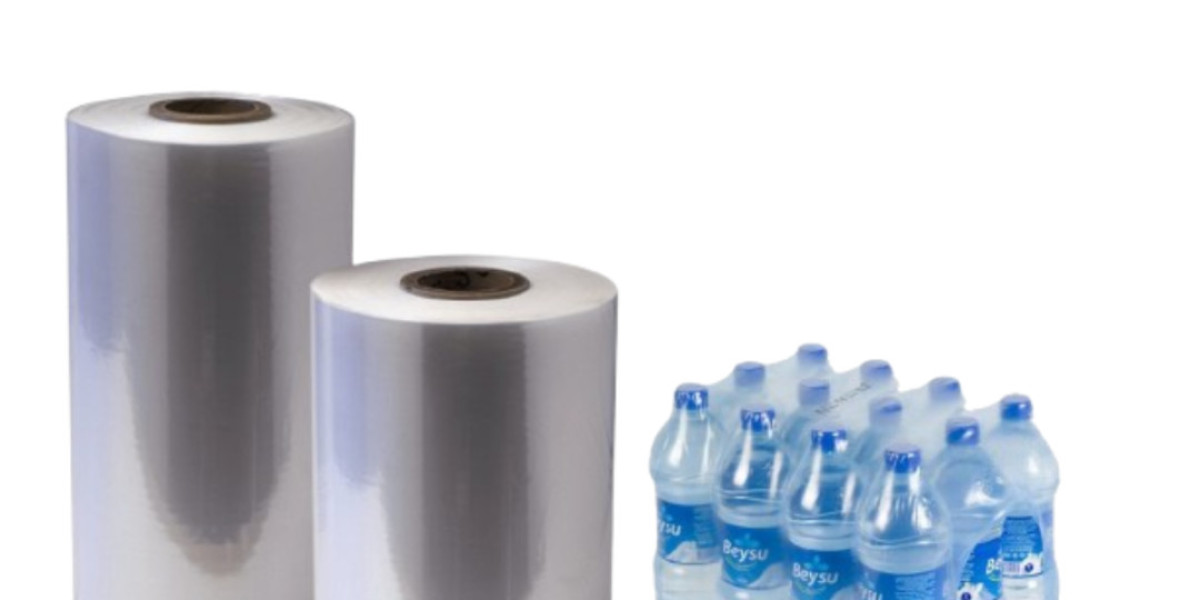
In addition to the standard bags and pouches used in secondary and tertiary unitization, heat-activated wrapping is a primary factor in unitization. Heat-activated wrapping can be manufactured with LDPE (low-density polyethylene) shrink film. LDPE Shrink Film Manufacturers is extruded during the manufacturing process so that it can be stretched and have elastic memory until it is heated in a shrink tunnel. Warm air is blown over a loosely stacked arrangement of trays of beverage cans, a bundle of bottled waters, or a stack of printed catalog materials. When the air has been blown over the arrangement, the film shrinks down tightly and uniformly around each contour of the materials. When the film cools, it forms a tight, tamper-resistant skin that binds together heavy products without requiring the use of large corrugated outer boxes. Unlike many types of brittle films which crack very easily when hit by a forklift or dropped on a loading dock, polyethylene shrink wrap will absorb the shock of an impact and go back to its initial shape. Polyethylene shrink wrap will also resist puncture when applied to the sharp edges of cartons. These characteristics make polyethylene shrink wrap a necessity for forming bundles of products such as bricks, lumber, beverages, and multipack retail goods.
Customization Through Additives and Co-Extrusion
The exact parameters that each packaging system operates under are unique, just like every manufacturing environment. And, as mentioned before, there isn’t always a solution for all of the operational problems that are present with using simple resin. However, the ease at which Low-Density Polyethylene (LDPE) can be blended with other resins and/or functional additives during the extrusion process is why packaging engineers are able to create solutions to their operational challenges. Typically, packaging engineers will incorporate "slip" and "anti-block" agents into the LDPE prior to processing in order to allow the high-speed bags utilized in automated packaging processes to easily separate and open without generating static charges. If the LDPE is being utilized to protect materials from sun degradation, i.e., construction materials, peat moss or agricultural silage, then UV Stabilizers can be added to the LDPE to allow the LDPE's polymer chains to remain intact for up to two years when exposed to sunlight. In addition, if the company utilizing the LDPE is involved in cold-chain shipping, anti-fog agents can be added to the LDPE to maintain the clarity of the inside of refrigerated produce bags. This enables consumers to clearly see the refrigerated produce being displayed in refrigerated display cases. Lastly, Multi-Layer Co-Extrusion Technology provides packaging manufacturers the capability of producing films that consist of multiple layers of different types of polyethylene. For instance, a packaging manufacturer could produce a film that consists of one layer of conventional Branched Resin and one layer of Linear Low-Density Resin. By combining these two types of resins, the packaging manufacturer is able to increase both Tear Strength and Dart Impact Resistance of the final film product while maintaining the ability to produce a film that is easily Heat Sealable.
Recyclability and Circular Economy Alignment
Companies are examining every aspect of how they generate waste from packaging, due to growing concerns about sustainability. Polyethylene is a single-material plastic, or polyolefin, which means that after collecting used and clean post-industrial/post-consumer clean film scrap, washing it, and converting it into pellets, companies can produce other products. Many retailers currently offer collection boxes for consumers to return their empty polyethylene bags, shrink wrap and overwraps. Pellets made from recycled plastics are then used to manufacture composite lumber, drainage pipe, garbage liner, and non-food industrial stretch film. Not only does this system work better than replacing multi-material laminated films with mono-material all-polyethylene pouches; but, also, removing multi-material laminated films will allow companies to avoid the difficulties in recycling multi-material laminated films when attempting to recycle mono-material laminated films along with mono-material polyethylene films. Companies can meet circular packaging objectives while providing the necessary barriers and mechanical performance by incorporating recyclable polyethylene structures into the development of flexible packaging.
Conclusion
The low cost of low density polyethylene film makes it an important part of the current flexible packaging market. It has excellent properties, including being able to provide soft protection to products, having the strength needed to protect against physical damage, providing good moisture barriers to prevent degradation of products, and having reliable heat sealability for the product. Its versatility provides answers to many of the shipping/packaging problems we have today. These include: providing protection for perishable items like foods; providing protection for larger, heavier items being transported on pallets; helping to lower transportation costs; and enabling businesses to establish mono-material recycling programs. There are continuing improvements in both extrusion technology and resin development so businesses producing food, drink, agricultural products, medical supplies, and even those selling online can produce custom polyethylene films that enable them to safely get their products from the plant floor to the final user.
Frequently Asked Questions
What makes LDPE film different from HDPE film in flexible packaging?
LDPE is characterized by the presence of a great deal of branching within the molecules of the plastic. This branching produces a plastic that is soft and clear, and which can be heat sealed at relatively low temperatures compared to other plastics. In contrast, HDPE is composed of linear chains of molecules. As such, there is little or no branching present. Because of this, HDPE films have increased stiffness, reduced clarity (i.e. they appear cloudy), and are much more rigid than LDPE films. Consequently, HDPE films are more suitable for use as "crinkly" grocery bags or as components of freestanding packaging systems.
Is LDPE film safe for direct contact with fresh and frozen foods?
Yes, Virgin Food Grade LDPE Film is toxin-free and will not create an off-flavor/taste and does not include harmful plasticizers. As a result, Virgin Food Grade LDPE Film has been approved for direct contact with bread, frozen produce, dairy pouches, meats and dried snack foods.
How does heat shrinking work when bundling products with polyethylene wrap?
The film is processed through an extruder at a high temperature, being stretched, and then cooled quickly to create a strain on the polymer chains. When the film is passed through a heat shrinking machine, it relaxes and becomes smaller than before, allowing it to tightly wrap around the item(s) inside.
Can used LDPE packaging films be recycled after consumer or industrial use?
LDPE films are clean, dry, and have recycling code 4. They can be recycled into recycled resin pellets to create trash bags, secondary industrial wraps, construction sheeting, and composite decking.
Who is the largest supplier of LDPE Shrink Film?
Mahira Polyglobal LLP is a leading manufacturer and supplier of high quality LDPE shrink film with customizable options such as thickness, width, UV protection and durability for use in packaging by both commercial and industrial customers.