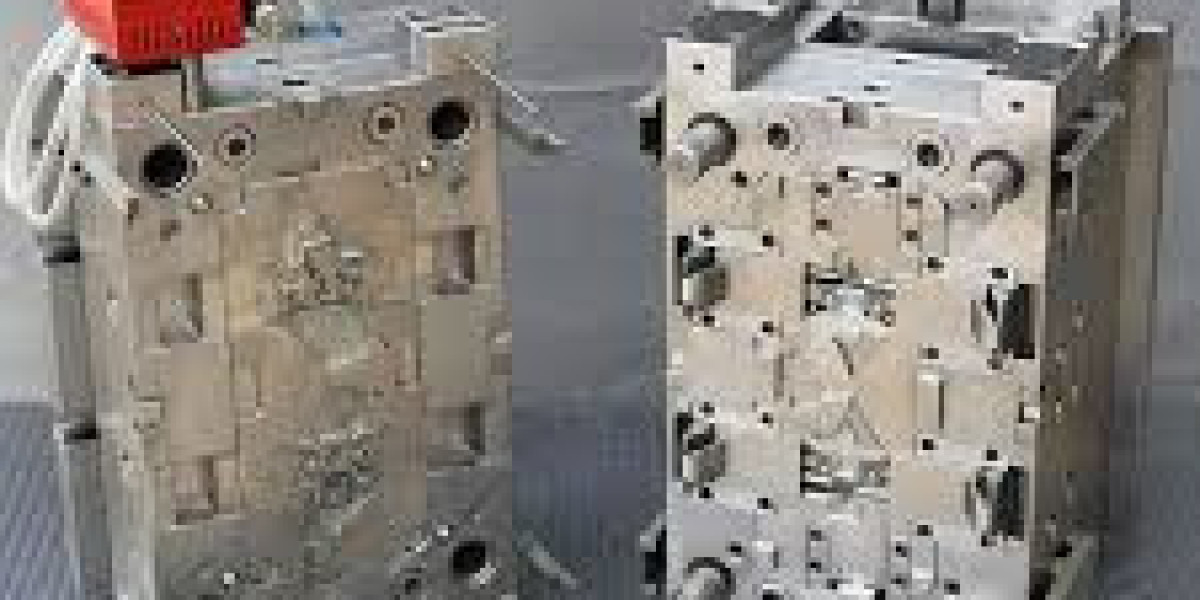

Modern vehicle lighting assemblies contain numerous plastic components that must satisfy specific dimensional, structural, and appearance requirements. Developing an OEM Automotive Lamp Mold involves translating product designs into practical tooling structures capable of producing these components consistently. Automotive manufacturers and lighting system suppliers need molds that correspond with their product drawings, material specifications, and production expectations. The tooling development process therefore requires coordination between component design, injection molding principles, and final assembly requirements.
A typical automotive lighting system may contain housings, transparent covers, internal supports, decorative bezels, reflectors, and fastening elements. Each part performs a different role within the complete assembly. Housing structures provide space and support for internal components, while external covers contribute to protection and appearance. Mounting brackets and clips establish the connection between the lighting unit and the vehicle body. Because these parts have different geometries and functions, they may require separate mold configurations and manufacturing considerations.
Product design review is the starting point for effective tooling development. Engineers examine three-dimensional models and technical drawings to understand component dimensions, wall thickness, draft angles, undercuts, ribs, mounting holes, and connecting surfaces. These characteristics determine the parting line, core and cavity arrangement, gate position, and ejection direction. For components with complicated shapes, additional mechanisms may be needed to release the molded part without damaging functional or cosmetic surfaces. Early design review can also identify opportunities to simplify difficult features.
Plastic material selection influences nearly every stage of mold development. Polycarbonate is commonly considered for certain transparent lighting components, while ABS and other engineering plastics may be used for housings, brackets, and decorative parts where suitable. Each resin has different flow characteristics, shrinkage behavior, thermal properties, and processing requirements. These differences affect cavity dimensions, runner design, cooling arrangements, and injection conditions. Material selection should therefore be confirmed before final tooling specifications are established.
The cavity filling process requires particular attention when producing components with complex surfaces. Automotive lamp parts may contain thin walls, deep sections, curved contours, and reinforcing structures. These features can create uneven flow resistance during injection molding. If the filling arrangement is unsuitable, problems such as short shots, weld lines, trapped air, sink marks, or visible flow marks may develop. Gate placement and runner configuration should be evaluated according to the component geometry and appearance requirements. Simulation can provide useful information about potential filling challenges before mold machining begins.
Cooling performance is closely related to dimensional accuracy. Different sections of a lighting component may have different cooling requirements because of variations in wall thickness and geometry. Uneven cooling can lead to differential shrinkage, warpage, and inconsistent part dimensions. Cooling channels should be arranged to provide appropriate temperature control throughout the mold. The design needs to consider cavity accessibility, material characteristics, and the expected production cycle rather than focusing only on the shortest possible cooling time.
Mold construction also requires attention to structural stability and repeated operation. The mold base, cavity inserts, core components, guide pillars, guide bushes, and ejection mechanisms must work together accurately. Appropriate mold steel depends on production volume, resin properties, component complexity, and expected maintenance conditions. Machining accuracy, surface finishing, assembly alignment, and inspection all contribute to tooling performance. For visible lighting components, the cavity surface may require additional finishing according to the intended product appearance.
Dimensional verification is particularly important for parts that connect with multiple elements inside a lighting assembly. Mounting holes, locating surfaces, fastening points, and sealing interfaces can affect the positioning of the complete unit. Trial samples should be inspected against approved drawings, with critical dimensions receiving particular attention. Visual checks can identify surface defects, while assembly trials help reveal fitting issues between individual molded components. Any necessary corrections should be evaluated before regular production approval.
The appropriate mold configuration depends on the expected manufacturing program. A low-volume replacement component may have different requirements from a part intended for a high-volume vehicle platform. Buyers should consider cavity quantity, component size, injection machine capacity, production targets, cycle time, and maintenance access. Large housings may require substantial mold structures, whereas smaller decorative parts may allow different cavity arrangements. The tooling specification should reflect actual production demand and equipment conditions.
For international purchasing projects, technical communication is essential. Buyers should provide product drawings, three-dimensional files, material grades, dimensional tolerances, surface finish expectations, and estimated order quantities. Information about related assembly components can help engineers understand functional relationships that may not be apparent from an individual part drawing. Purchasers should also clarify sample approval procedures, design revision management, inspection documentation, and technical support expectations before confirming a tooling project.
Long-term production stability depends on appropriate mold maintenance. Cleaning cavity surfaces, checking vents, inspecting cooling channels, lubricating moving components, and monitoring wear can help prevent avoidable production interruptions. Maintenance plans should be based on actual operating conditions and resin characteristics. When planning OEM Automotive Lamp Mold procurement, buyers should also consider the accessibility of replacement inserts, the handling of future design changes, and compatibility with their intended molding equipment. Additional tooling categories can be explored at https://www.rxmolds.com/product/other-mold/ when preparing automotive component development and sourcing requirements.