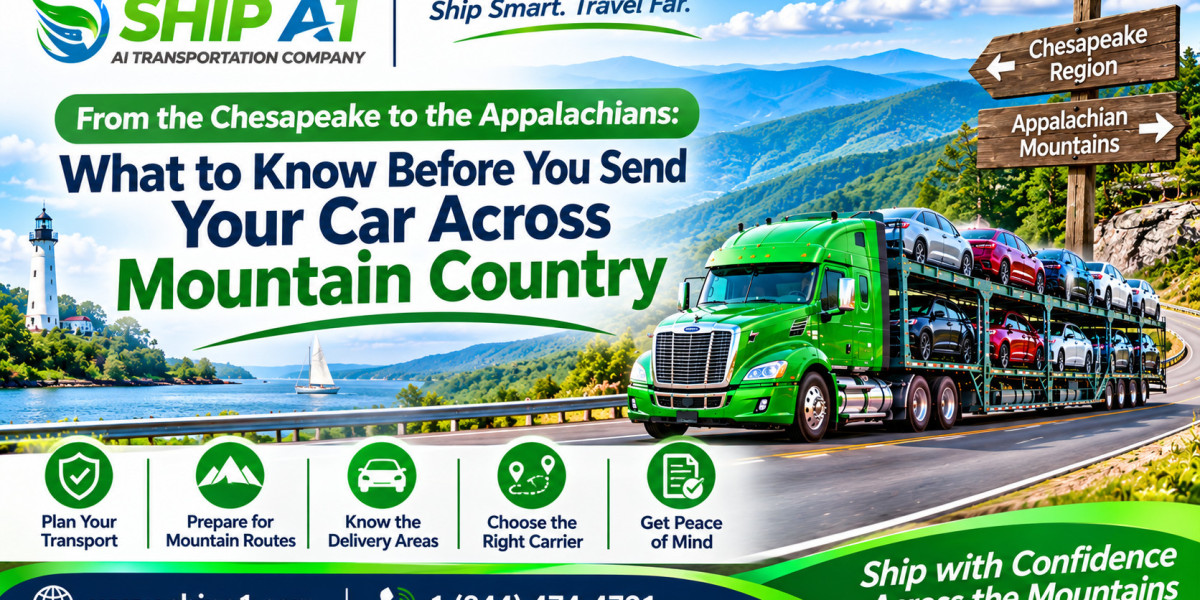

Virginia and West Virginia share a long border, a mountain range, and some of the most scenic driving in the country. They also share a few challenges that matter when a carrier is hauling your vehicle: winding roads, steep grades, changing weather, and pickup spots that are not always easy for a big truck to reach. A little planning makes all the difference.
The short answer: Virginia car shipping and West Virginia car shipping are priced by distance, vehicle size, open or enclosed transport, timing, and how easy your pickup and delivery points are to reach. Booking one to two weeks ahead and sharing accurate vehicle and location details gives you the most reliable quote.
Why the Terrain Matters More Than You Think
On a flat interstate, a car carrier can run efficiently from city to city. In the mountains, things change. Steep grades slow trucks down, narrow roads limit where a full-size trailer can turn, and weather can shift from sunny to foggy in a single valley. None of this makes shipping difficult, but it does explain why carriers prefer pickup points near main roads and why timing sometimes shifts.
If your home sits at the end of a long gravel road or up a hillside driveway, do not worry. A nearby parking lot, shopping center, or wide road is a normal solution. Just agree on the spot before pickup day.
Virginia Car Shipping: Coast, Capital Region and Blue Ridge
Virginia stretches from the Atlantic coast to the Appalachian foothills, and demand follows that variety. Northern Virginia sees constant movement tied to the Washington, D.C. area, while Richmond, Virginia Beach, Norfolk, Roanoke, and Charlottesville each have their own rhythms. Military families around Norfolk and other installations add steady demand, and college towns create peaks at the start and end of semesters.
Key routes include I-95 along the east, I-64 across the middle, and I-81 running the length of the Shenandoah Valley. Congestion in Northern Virginia and around Hampton Roads can affect pickup and delivery timing, while coastal storms in late summer and fall can occasionally shift schedules.
If you are comparing options, you can learn more about Virginia car shipping before requesting your quote.
West Virginia Car Shipping: Smaller Towns, Bigger Planning
West Virginia is rugged and beautiful, with cities such as Charleston, Huntington, Morgantown, Parkersburg, Wheeling, and Martinsburg spread across hills and river valleys. Highways such as I-64, I-77, I-79, and I-81 connect the state, but many smaller communities sit well off the main routes.
Because of that, location is the biggest factor to think about. A pickup in a larger town near an interstate is usually straightforward. A remote hollow or a mountain community may require meeting the driver at a nearby lot or main road. Winter snow and ice at higher elevations can also slow travel, so build in flexibility between December and March.
For route-specific information, visit the page on West Virginia car shipping.
Moving a Car Between the Two States
Because Virginia and West Virginia are neighbors, many shipments between them are short or mid-distance, often running along I-64 or I-81. A trip from Richmond to Charleston, West Virginia, for example, is roughly 300 miles, while Roanoke to Morgantown is a bit under 300 miles. Many shorter routes like these take around 1 to 3 days on the road, though weather, traffic, and carrier schedules can change that. Shorter distances generally cost less overall than long cross-country trips.
What Shapes Your Price
No two quotes are exactly the same, because several factors work together:
- Distance. Longer routes cost more overall, although the rate per mile often drops on long hauls.
- Vehicle size and weight. SUVs, pickups, and vans take more trailer space than compact cars.
- Open or enclosed transport. Open trailers are more economical, while enclosed trailers cost more and add protection.
- Vehicle condition. A car that does not run needs special loading equipment, which can add to the cost.
- Location. Easy-to-reach metro pickups are usually simpler to price than remote mountain addresses.
- Season and demand. Peak moving periods and winter weather can influence rates and schedules.
When you compare quotes, look beyond the final number. Check what is included, the insurance information, the payment terms, and any additional fees.
Open or Enclosed for Mountain Routes
Open transport is the standard choice for everyday cars, sedans, and standard SUVs, and it is widely available. On routes through the mountains, your vehicle faces the same weather and road debris it would on a normal drive. Enclosed transport keeps the vehicle inside a covered trailer, which many owners prefer for classic, luxury, exotic, or high-value cars, especially when winter weather is a concern. Choose based on your vehicle's value and your comfort level.
Practical Tips Before Pickup
- Book early. One to two weeks ahead gives you more carrier options, especially in busy seasons.
- Pick an accessible spot. If a truck cannot reach your door, agree on a nearby wide road or parking lot.
- Stay flexible. A wider pickup window helps carriers fit your vehicle into a route.
- Wash and photograph the car. Take dated photos of every side, the interior, and the odometer.
- Remove personal items. Carriers usually do not insure loose belongings.
- Keep the tank around one-quarter full. Disable alarms and secure loose parts.
- Keep your paperwork. Hold on to your keys, documents, and the Bill of Lading.
After Delivery
Inspect the vehicle with the driver before signing, and note any concerns on the paperwork. If you are relocating permanently, update your registration, title, and insurance for your new state. Rules and deadlines vary, so check with the Virginia DMV or the West Virginia DMV for current requirements.
Frequently Asked Questions
How long does it take to ship a car between Virginia and West Virginia?
Many shipments between the two states take about 1 to 3 days on the road. Weather, traffic, terrain, and carrier schedules can affect timing, and pickup scheduling may add time before the trip begins.
Does mountain terrain make shipping more expensive?
It can, mostly when a pickup or delivery location is remote or hard for a large truck to reach. Choosing an accessible meeting point can help keep things simple.
Is open transport cheaper than enclosed?
Generally, yes. Open transport is widely available and carries multiple vehicles, so it usually costs less. Enclosed transport costs more because of the added protection.
Can I ship a car that does not run?
Often yes, but tell your provider upfront. Non-running vehicles need special loading equipment and may cost more.
Does winter affect delivery?
It can. Snow and ice, especially at higher elevations, may slow trips and move pickup or delivery windows, so allow extra time between December and March.
How early should I book?
Booking one to two weeks ahead is a good general guide. During busy seasons or winter weather, earlier is better.
Why Customers Choose Ship A1 Auto Transport
Ship A1 Auto Transport helps customers arrange vehicle transportation across the United States, including Virginia car shipping and West Virginia car shipping. We handle cars, motorcycles, boats, RVs, and heavy equipment, with clear communication and coordination from quote to delivery.
Before you confirm a booking, review your quote, carrier information, and insurance details so you know exactly what to expect.
Ready to ship? Request a free quote with your vehicle details, route, and preferred dates.







