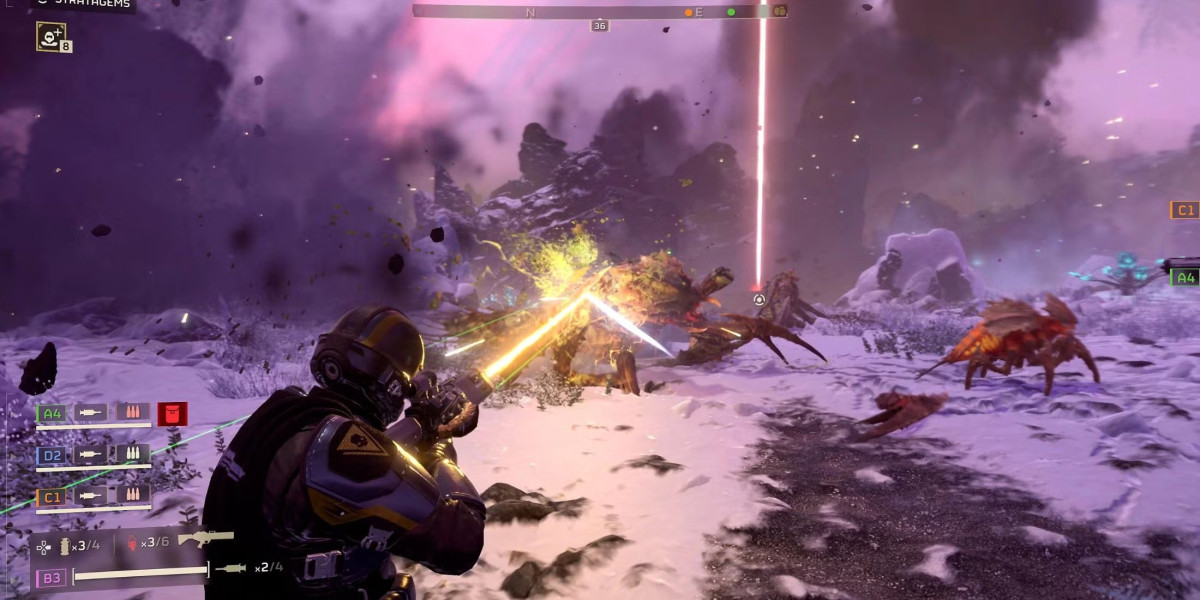

Choosing a mission difficulty is not simply a question of how many enemies a squad can defeat. Players working toward ship upgrades also need to consider how much time an operation takes, which Sample categories are available, and whether the team can collect resources without sacrificing the main objective. Helldivers 2 Super Credits reward players through mission and Warbond progression, while Samples provide the materials needed for permanent ship improvements. A higher difficulty can offer a larger resource haul, but the extra enemies and mission pressure make the decision more complicated than selecting the highest number on the difficulty screen.
Difficulty 6 Changed the Super Sample Progression Path
One of the most useful changes for players collecting Samples was the decision to make Super Samples available from difficulty 6, Extreme. Arrowhead introduced this change in patch 1.000.400 because requiring players to reach difficulty 7 or above was pushing some people into missions harder than they wanted to play.
That adjustment gave more squads access to the final Sample category without requiring them to immediately attempt Suicide Mission or higher. It also made difficulty selection more flexible for players who want to upgrade their ships while still enjoying a manageable level of combat pressure.
| Difficulty | Name | Sample access |
|---|---|---|
| 1 | Trivial | Common |
| 2 | Easy | Common |
| 3 | Medium | Common |
| 4 | Challenging | Common and Rare |
| 5 | Hard | Common and Rare |
| 6 | Extreme | Common, Rare, and Super |
| 7 | Suicide Mission | Common, Rare, and Super |
| 8 | Impossible | Common, Rare, and Super |
| 9 | Helldive | Common, Rare, and Super |
| 10 | Super Helldive | Common, Rare, and Super |
This gives players a clear progression threshold. Anyone who needs Rare Samples can begin collecting them at Challenging, while Super Samples require Extreme or above.
The choice between difficulty 6 and the higher settings should depend on the squad's ability to finish missions consistently. A group that extracts successfully from Extreme operations may make steadier progress than one that repeatedly struggles through Helldive missions.
Higher Difficulty Can Increase the Sample Haul
The expected resource count generally rises with mission difficulty. This is one reason experienced squads often choose higher-level operations when they need to collect large quantities of materials.
The following figures are commonly reported for standard missions and should be treated as typical ranges rather than guaranteed rewards for every operation. Actual results can vary with mission layout and resource placement.
| Difficulty | Common Samples | Rare Samples | Super Samples |
|---|---|---|---|
| Extreme (6) | 30–35 | 20–25 | 2–3 |
| Suicide Mission (7) | 36–40 | 27–30 | 3–4 |
| Impossible (8) | Around 40 | 30–35 | Around 5 |
| Helldive (9) | Around 40 | 35–40 | Around 6 |
| Super Helldive (10) | Around 40 | Around 35–41 | Variable |
The numbers help explain why players who are comfortable with difficulty 8 or 9 may prefer those operations for longer-term progression. They can collect more valuable materials in a successful run.
However, the maximum potential reward is not the same as the expected reward for every squad. If a team regularly loses control of the mission, spends too long recovering dropped equipment, or fails to extract, the theoretical advantage of a higher difficulty becomes less meaningful.
The Best Difficulty Depends on What the Ship Needs
A player who needs Common Samples has different options from someone who is short on Super Samples. Common materials can be collected across the difficulty range, while the other two categories have their own unlock thresholds.
This makes it useful to check the next ship module before choosing an operation. If the upgrade requires only Common and Rare materials, there may be no reason to move into Extreme just to collect resources the player cannot spend yet.
Consider three common situations:
When Common Samples are the main shortage: A squad can choose a comfortable mission and focus on completing objectives while checking nearby resource locations. There is little benefit in adding unnecessary combat pressure when the required material is available at lower difficulty.
When Rare Samples are needed: Challenging and above become available options. Players can compare their completion rate and the amount of time required for each operation before deciding whether to increase difficulty.
When Super Samples are needed: Extreme is the starting point. Players who can handle Suicide Mission or Impossible may obtain more per successful operation, but the squad should still consider how consistently it can complete the mission.
This approach keeps resource collection connected to actual ship progression rather than turning every mission into an attempt to gather as much of everything as possible.
A Successful Extraction Matters More Than a Perfect Route
A resource route is useful only when the squad can follow it without losing control of the operation. Higher difficulties introduce more pressure, so players need to decide when an optional search is worth the time.
A good team can divide responsibilities without spreading too far apart. One player may watch an approaching patrol while another checks a nearby point of interest. When the area becomes dangerous, the squad can regroup and return to the main objective.
The extraction stage deserves particular attention. Samples carried by a squad member are retained when they board the shuttle, so players should avoid leaving the resource carrier isolated during the final fight.
A few habits can help:
• Mark nearby resource locations before moving away from an objective.
• Avoid chasing distant patrols when the squad is already carrying a valuable haul.
• Recover dropped Sample containers when the route is reasonably safe.
• Keep the carrier within supporting distance of the rest of the team.
• Leave enough time to reach extraction rather than searching until the final moment.
These practices are more useful than trying to follow a rigid route that may not match the current map.
Mission Type Can Matter as Much as Difficulty
A high difficulty does not guarantee that every Sample category will appear in the same way on every mission. Resource placement is affected by mission layout, and some operations have different exploration opportunities from ordinary missions.
The September 2026 update added Common Samples to Evacuate-Defense maps, giving players another opportunity to collect them during defensive operations. This is a useful reminder that resource availability can change with patches and mission design.
Players should also be careful when using older guides. A guide written before the difficulty 6 change may still list difficulty 7 as the Super Sample requirement. That information is outdated. Checking current patch notes and the in-game mission conditions is more reliable than blindly following an old recommendation.
Make the Next Operation Match the Upgrade Goal
The most efficient mission is not always the one with the highest possible resource count. It is the one the squad can complete reliably while collecting the materials it actually needs.
Players who are comfortable with Extreme can begin working toward Super Samples without immediately jumping into the most punishing operations. More experienced groups can move upward when they want larger hauls and can handle the additional pressure.
Before launching, check the next module's requirements, choose a difficulty that fits the squad, and agree on how much exploration is reasonable during the mission. Players planning to Helldivers 2 Samples for sale should compare their current resource shortages with the available mission options, rather than treating difficulty alone as a measure of progress.






