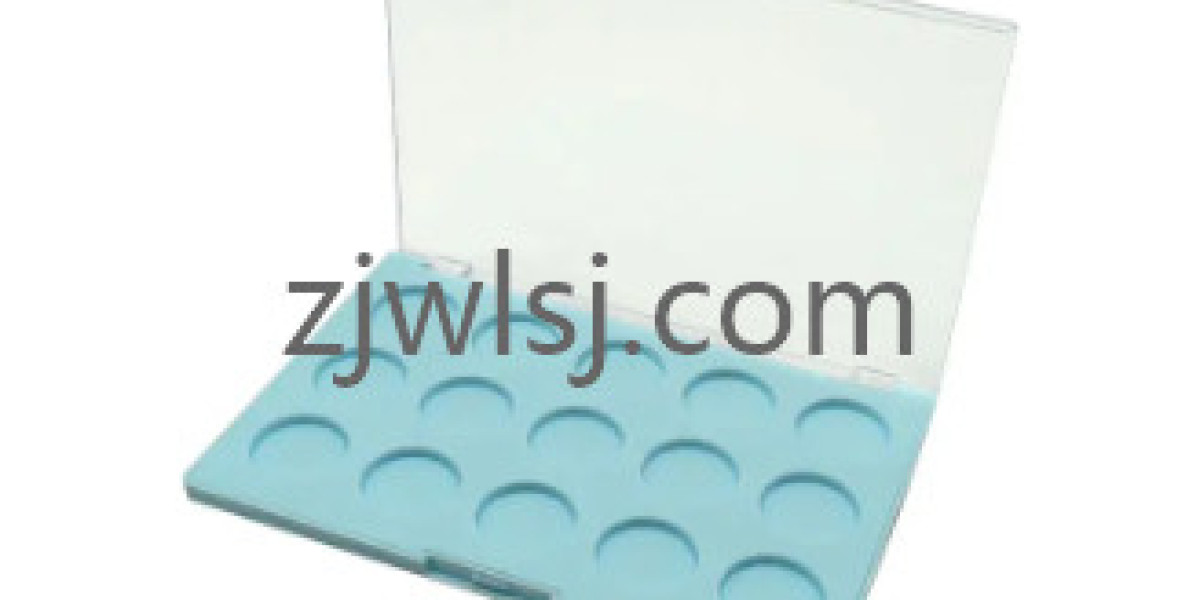

Product organization and visual presentation are essential when developing coordinated color cosmetics for different consumer groups. A Makeup Eyeshadow Palette provides a structured way to combine several shades in one package, helping consumers create different looks while giving brands opportunities to introduce distinctive color collections. Its design must consider the relationship between the cosmetic pans, internal compartment arrangement, external dimensions, and overall appearance. For manufacturers and purchasing teams, the challenge is to select a packaging structure that meets product requirements while remaining practical for production and distribution.
The construction of a multi-shade cosmetic package normally includes an outer lid, a base, and an internal tray. The tray is designed to hold individual cosmetic pans in a planned arrangement. Depending on the product concept, the package may contain a limited number of colors or a larger selection organized into different sections. Square and rectangular designs can make efficient use of internal space, while round and customized shapes offer alternative visual presentations. The final structure should be developed according to the size of each pan and the desired appearance of the collection.
Internal compartment planning requires careful attention. Designers need to consider the number of shades, the dimensions of each pan, and the spacing between individual sections. A balanced layout can improve product organization and create a more coherent appearance when the package is opened. Some collections may use equally sized pans, while others combine larger compartments for frequently used colors with smaller sections for accent shades. The arrangement should also leave sufficient structural space for the surrounding housing and the closing mechanism.
Plastic materials are frequently used in cosmetic packaging because they support a variety of structural and decorative requirements. ABS, AS, and PS are among the materials considered for different packaging components. Their characteristics vary in terms of rigidity, transparency, processing behavior, and surface appearance. Material selection should be based on the function of each component, the intended product positioning, and the manufacturing process. Where several materials are used in one package, their compatibility and assembly requirements should be reviewed during development.
Injection molding is widely applied to produce plastic cosmetic packaging parts. The process allows manufacturers to form covers, bases, and internal trays with defined dimensions and structural details. Mold design influences the accuracy of compartment positioning, wall thickness, surface quality, and component alignment. In a multi-pan package, even small dimensional differences may affect how the cosmetic pans fit into their designated sections. Mold development and sample inspection therefore play important roles before larger production quantities are arranged.
Decorative finishing helps establish the visual character of a beauty collection. Depending on the material and product structure, finishing options may include spray painting, electroplating, screen printing, hot stamping, and 3D printing. These processes can support different combinations of color, texture, graphics, and metallic effects. Brands may choose a minimal appearance for an understated collection or a more decorative finish for a product positioned around fashion and seasonal trends. The chosen treatment should remain consistent with the brand identity and manufacturing requirements.
Practical features can improve the usability of the package. Some designs include a mirror to support application away from home, while others provide space for brushes or small accessories. A secure closing mechanism helps keep the package closed during ordinary handling and transportation. The size and weight of the complete product should also be considered, especially when portability is an important part of the product concept. Additional features should be included only when they provide a meaningful benefit to the intended consumer.
Color organization influences how consumers interact with the finished product. A palette developed around neutral shades may be positioned for daily makeup, whereas a collection containing brighter colors can serve more expressive styling preferences. The packaging should make the shades easy to identify and provide enough space for convenient access. Brands should also consider how the color arrangement appears in product photography, online listings, and retail displays because these environments influence how consumers first evaluate the product.
For international buyers, the selection process should include a review of technical specifications, packaging dimensions, material options, decoration requirements, and order quantities. Compatibility with the filling process is particularly important because the cosmetic pans must be installed securely and consistently. Buyers should request samples to evaluate the appearance, fit, closure performance, and assembly quality. Clear communication about product drawings, tolerances, and finishing standards can help manufacturers understand expectations and reduce unnecessary development changes.
Customization offers brands opportunities to differentiate their products. Depending on the design, manufacturers may support customized housing colors, printed logos, decorative effects, compartment arrangements, and structural modifications. Some changes can be achieved through finishing processes, while others may require adjustments to the mold. Zhejiang Weili Plastic Co., Ltd. provides plastic cosmetic packaging solutions supported by mold development, injection molding, and secondary processing. Early technical communication can help purchasing teams determine which customization options are suitable for their product concepts.
Quality control should cover dimensional accuracy, pan fitting, surface consistency, lid alignment, and the performance of the closing structure. Buyers should also confirm that the selected packaging is appropriate for the intended cosmetic formulation and production process. During the development of a Makeup Eyeshadow Palette, evaluating both consumer usability and manufacturing requirements can help create a package that is visually consistent and commercially practical. For further information about cosmetic packaging structures and available product options, visit https://www.zjwlsj.com/product/eye-shadow-palette/shadow-palette-1-grid/.