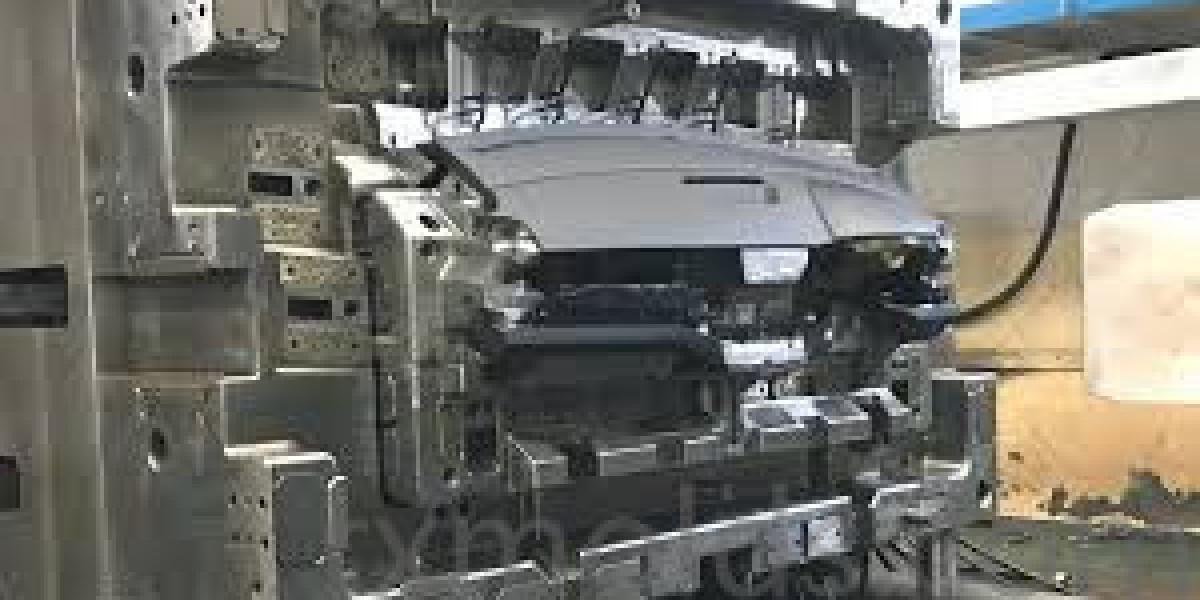

Selecting an appropriate tooling partner is an important decision for automotive lighting companies developing new rear lamp components or expanding existing production programs. A qualified Rear Lamp Mold Manufacturer needs to understand not only injection mold construction but also the dimensional, structural, and assembly requirements of automotive lighting products. Rear lamps contain multiple plastic components with different functions, including housings, lenses, decorative frames, and internal supports. Their manufacturing requirements can vary considerably according to vehicle design, component geometry, and material selection.
Automotive rear lighting products have become increasingly diverse in shape and structure. Some vehicle models use compact rear lamp assemblies, while others feature long, curved designs integrated into the rear body or tailgate. These designs create different challenges for mold engineering. Deep cavities, complex contours, thin wall sections, reinforcing ribs, and fastening structures all influence tooling configuration. Understanding the product's complete geometry before machining begins helps establish a suitable manufacturing approach.
The mold development process normally starts with reviewing customer drawings and three-dimensional product data. Engineers examine the dimensions, wall thickness, draft angles, parting lines, mounting positions, and functional interfaces. These details determine how the cavity and core should be arranged and whether additional mechanisms such as sliders or lifters are necessary. A comprehensive design review can also identify areas where product geometry may create difficulties during injection molding or subsequent assembly.
Material compatibility is another essential consideration. Automotive rear lamp components may use polycarbonate, ABS, or other engineering plastics depending on their intended application. Transparent components have different processing and surface requirements from opaque housings or decorative parts. Resin characteristics such as melt flow, shrinkage, thermal behavior, and mechanical properties affect mold design and production conditions. Buyers should confirm the intended material grade and its relevant processing information before approving tooling construction.
Injection system design influences how evenly plastic fills the cavity. Large housings and complicated decorative components may contain multiple flow paths and changes in wall thickness. Poor gate positioning can contribute to weld lines, air traps, incomplete filling, and visible surface defects. A tooling supplier should evaluate the relationship between gate locations, runner arrangements, cavity geometry, and cosmetic requirements. Simulation tools may also help identify potential filling and pressure distribution issues during the engineering stage.
Cooling design deserves similar attention because rear lighting components often contain irregular shapes and different material thicknesses. Uneven cooling can result in dimensional variation, warpage, and longer production cycles. Cooling channels should be planned according to the cavity structure and the thermal characteristics of the selected resin. In difficult areas, engineers may need to consider alternative cooling arrangements to improve temperature distribution while preserving the mechanical strength of the mold.
The quality of mold machining and assembly directly affects the final tooling accuracy. Cavity inserts, core components, guide systems, ejectors, and moving mechanisms need to be manufactured and fitted according to the design requirements. Mold steel selection should reflect the anticipated production volume, resin characteristics, tooling complexity, and maintenance expectations. Precision machining, surface finishing, fitting, and dimensional inspection are important steps in preparing the tool for trial production.
Supplier evaluation should extend beyond the initial quotation. International buyers need to understand how a tooling company handles technical communication, drawing review, design changes, manufacturing schedules, and inspection procedures. Clear communication is particularly important when customers and suppliers are located in different countries. Technical drawings, revision records, material specifications, and approval procedures help reduce misunderstandings throughout the project.
Trial molding provides an opportunity to evaluate whether the completed tooling can produce components that meet the intended requirements. Sample inspections should cover critical dimensions, mounting positions, connecting surfaces, and overall geometry. Visual evaluation may also identify sink marks, scratches, uneven gloss, weld lines, or other defects. For components used in complete rear lighting assemblies, fitting trials are valuable because individual parts must work together correctly rather than simply meet isolated dimensional measurements.
Production planning is another factor that buyers should discuss before placing an order. Cavity quantity, mold dimensions, injection machine compatibility, expected output, and production cycle requirements all influence the appropriate tooling configuration. A large housing intended for continuous manufacturing may require a different arrangement from a small decorative component produced in several variations. The supplier should understand the customer's production targets before recommending a tooling structure.
Long-term mold management should also be included in the purchasing evaluation. Regular cleaning, lubrication, cooling channel inspection, vent maintenance, and examination of moving components help preserve tooling condition. Buyers should clarify maintenance responsibilities, spare component requirements, and procedures for handling future product modifications. These details can influence the total operating cost throughout the mold's service life.
When comparing a Rear Lamp Mold Manufacturer for an international sourcing project, purchasers should evaluate engineering communication, machining quality, dimensional inspection, trial sample management, and technical support together. A supplier that understands the relationship between component design, tooling construction, and final assembly can help customers manage development requirements more effectively. Before requesting quotations, buyers can review related product categories and tooling solutions at https://www.rxmolds.com/product/other-mold/ to prepare their component specifications and manufacturing plans.