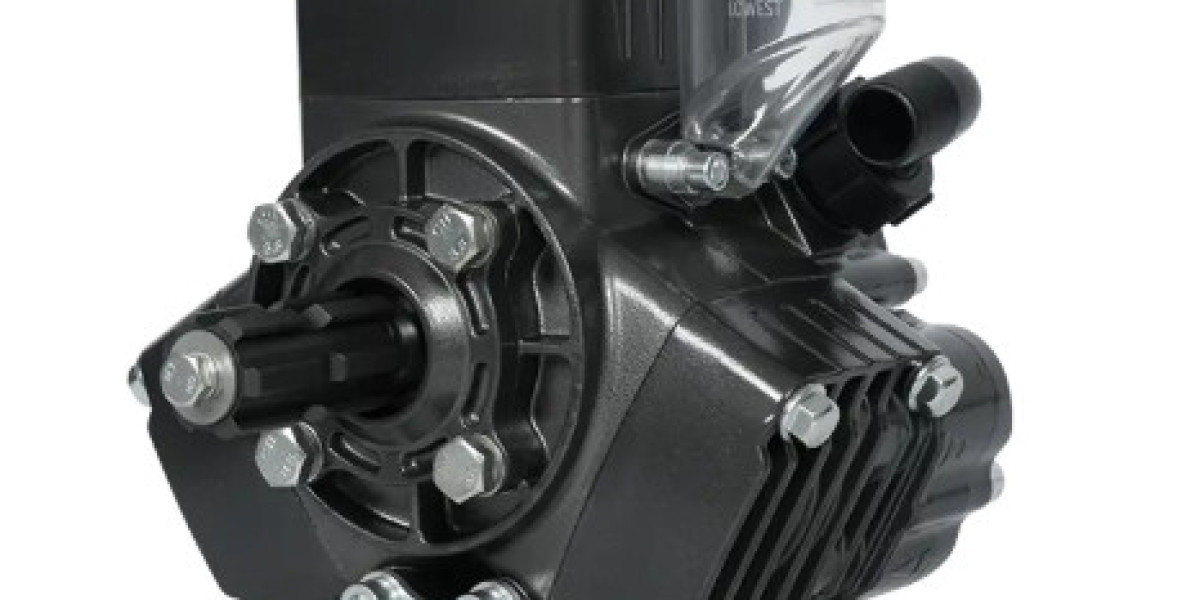

Handling agricultural chemicals requires pumping equipment that can accommodate different liquid formulations while maintaining dependable fluid transfer. A Diaphragm Pump For Pesticides uses a flexible membrane and directional valves to move liquid through a controlled pumping cycle, making this technology suitable for various agricultural spraying applications when the wetted materials are compatible with the chemical being handled. For agricultural machinery manufacturers, chemical equipment distributors, and international buyers, understanding the pump's construction and material requirements is essential when evaluating equipment for pesticide application.
Pesticide formulations vary considerably in their physical and chemical properties. They may include liquid concentrates, diluted solutions, suspension concentrates, emulsifiable formulations, and other mixtures prepared according to application instructions. Some liquids have different viscosities, while others contain ingredients that may interact with particular elastomers, plastics, or metal surfaces. Consequently, pump selection should begin with an understanding of the intended chemicals rather than relying on a general assumption that every agricultural diaphragm pump can handle all pesticide products.
The basic operating principle involves a diaphragm moving repeatedly inside a pumping chamber. When the membrane moves backward, the chamber expands and draws liquid through the inlet valve. When it moves forward, the chamber contracts and pushes liquid through the outlet valve. The directional valves help control fluid movement and prevent unwanted reverse flow. This reciprocating mechanism provides the pumping action needed to transfer pesticide solutions from a tank into the sprayer's distribution system.
An important construction feature is the separation between the liquid-contact chamber and the mechanical drive components. The diaphragm serves as a flexible barrier, reducing direct contact between the pumped chemical and the drive mechanism. This design can be advantageous for agricultural chemical applications, although it does not eliminate the need for careful material selection. The diaphragm itself, together with valve seats, seals, gaskets, and other wetted components, must withstand exposure to the specific pesticide formulation and its operating conditions.
Material compatibility should be assessed according to several factors. These include chemical concentration, temperature, exposure time, operating pressure, and the cleaning agents used after application. Elastomer materials that perform well with one formulation may deteriorate when exposed to another. Signs of incompatibility can include swelling, hardening, cracking, deformation, and reduced sealing performance. Buyers should request relevant material information from suppliers and confirm suitability before using a pump with unfamiliar agricultural chemicals.
The design of the inlet and outlet valves also influences pumping performance. Valves must respond correctly during each suction and discharge stroke to maintain directional liquid movement. Deposits, particles, and chemical residues may affect valve seating and contribute to reduced pumping efficiency. Where pesticide formulations contain suspended solids, the equipment should be evaluated for its ability to handle those materials under the intended operating conditions. Appropriate filtration and cleaning procedures help reduce the risk of unnecessary component wear.
Pressure and flow capacity must be matched to the pesticide spraying equipment. Different crops and application methods require different nozzle arrangements and liquid delivery conditions. For example, broad-acre sprayers may use multiple nozzles across a wide boom, while orchard machines may direct spray toward dense tree canopies. The pump must supply sufficient liquid volume while operating within the pressure range specified for the machine. Pressure regulation and suitable bypass arrangements are important parts of the complete hydraulic design.
Pesticide handling also involves operational safety. Chemical mixing, loading, spraying, flushing, and maintenance should follow the product label, equipment manufacturer's instructions, and applicable local regulations. Operators should use appropriate protective equipment and avoid opening pressurized connections during inspection. The spraying system should be checked for leakage before operation, particularly around hose fittings, valve assemblies, and diaphragm-related sealing areas. Proper handling procedures protect operators and help reduce unintended chemical release.
After spraying, cleaning is an essential maintenance activity. Residual chemicals left inside the tank, pump, hoses, and distribution lines may affect subsequent applications or damage incompatible materials. Flushing procedures should follow the chemical manufacturer's guidance and the sprayer manufacturer's recommendations. Operators should also inspect diaphragms, valves, seals, filters, and connections for visible deterioration or leakage. Components showing signs of damage should be replaced with suitable parts that meet the original equipment requirements.
For international B2B purchasers, sourcing decisions should include more than the advertised chemical-handling capability. Importers and distributors should evaluate material documentation, pressure and flow specifications, connection dimensions, spare parts availability, maintenance requirements, and the consistency of supplied products. It is also important to understand whether the pump is intended for continuous agricultural spraying, intermittent transfer, or another operating duty. These distinctions help prevent unsuitable applications and reduce potential after-sales problems.
Before integrating a Diaphragm Pump For Pesticides into agricultural equipment, buyers should verify chemical compatibility across every liquid-contact component, not just the diaphragm. They should also consider filtration, pressure control, cleaning access, and the availability of replacement parts. These details influence the practical suitability of the complete spraying system. For related inlet and outlet filtration products used in agricultural liquid handling applications, visit https://www.agriculturaldiaphragmpump.com/product/inlet-and-outlet-water-filters/