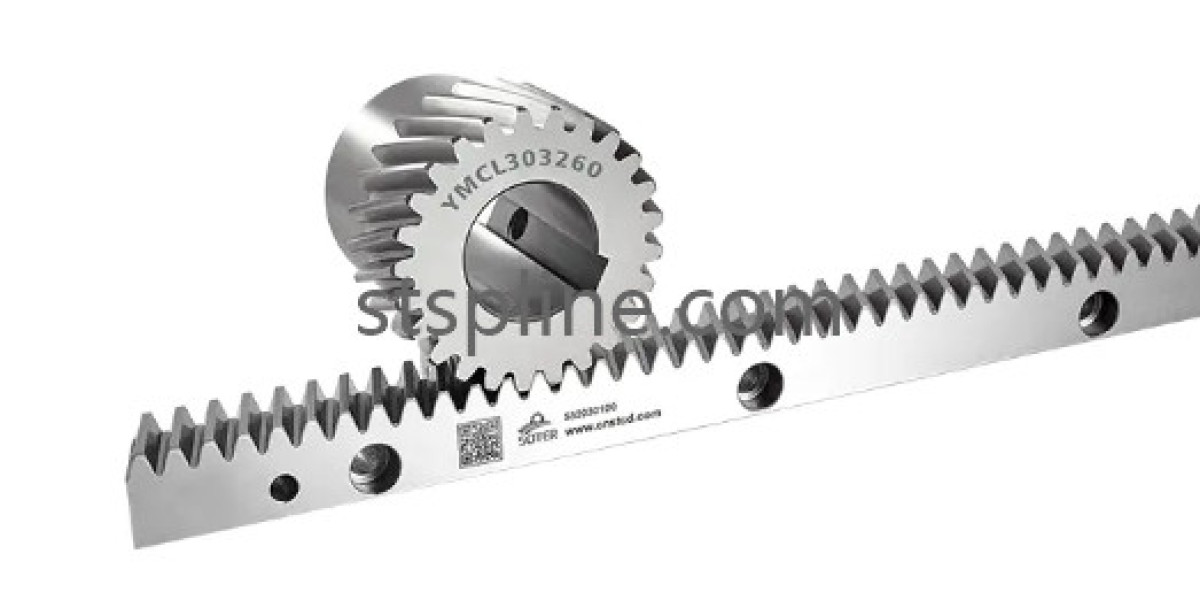

Metal transmission components are widely used in industrial machinery because they provide a practical way to transfer mechanical power and convert rotational movement into linear displacement. A Metal Rack And Pinion assembly combines a straight toothed rack with a circular pinion gear to create controlled linear motion. The selection of metal materials, tooth geometry, machining methods, and installation structure determines how effectively the components work together in different industrial environments.
The rack and pinion mechanism operates through direct tooth engagement. When a motor rotates the pinion, the gear teeth push against the corresponding teeth on the rack, generating movement along a straight path. Depending on the machine configuration, either the rack or the pinion assembly can travel. This arrangement is suitable for mechanical systems that require continuous linear movement, controlled positioning, and integration with motors, reducers, and supporting guide structures.
Metal selection is an important part of product development. Carbon steel is frequently used for industrial rack components because it offers a balance of mechanical strength, machinability, and manufacturing flexibility. Alloy steel can be considered when the application requires different mechanical characteristics or specific processing options. The final choice should reflect the working load, contact conditions, operating environment, and expected service requirements. Manufacturers also need to consider how the selected material responds to cutting, finishing, and any subsequent heat treatment.
The manufacturing process has a direct influence on the quality of the finished transmission components. Rack teeth are produced through appropriate machining methods, such as milling or specialized gear cutting. Depending on the required tooth profile and accuracy, additional grinding or finishing operations may be considered. Pinion gears require accurate tooth formation and suitable control of concentricity and surface condition. Consistency across both components is essential because the rack and pinion must maintain compatible engagement throughout their working range.
Tooth geometry is another major consideration. Module, pressure angle, pitch, and tooth profile determine the compatibility of the rack and pinion. These characteristics should be coordinated during the design stage rather than selected independently. Inconsistent dimensions may cause uneven contact, increased backlash, or irregular movement. For customized machinery, manufacturers often need to review technical drawings and application information before confirming the appropriate gear configuration.
Surface treatment can also influence the suitability of metal transmission components. Depending on the material and application, manufacturers may consider processes such as black oxide treatment, plating, or other suitable surface finishing methods. Heat treatment may be used where the design and material require additional attention to surface or core properties. The selection of these processes should account for the operating environment and the required mechanical characteristics without compromising dimensional accuracy.
Metal rack and pinion assemblies are used in various types of industrial equipment. CNC machining centers may incorporate rack-driven transmission structures in selected linear axes. Laser cutting machines use mechanical movement systems to position cutting assemblies and machine structures. In these applications, the rack and pinion must coordinate with linear guides, motors, control systems, and supporting machine frames to achieve the intended movement.
Industrial robots and truss manipulators are additional application areas. These machines often require movement between defined working positions, and rack-based transmission systems can be integrated into their mechanical structures. Automotive automation production lines may use linear transmission components in material handling, assembly, and positioning operations. Lithium battery manufacturing equipment also involves automated handling and processing systems where mechanical drive components support the movement of production assemblies.
Installation conditions should be considered before the components enter service. The rack mounting surface needs to provide appropriate support, while alignment must be maintained along the intended direction of travel. The pinion should be positioned to achieve suitable engagement without unnecessary interference. For systems using multiple rack sections, joint alignment and tooth continuity deserve particular attention. Improper installation can affect movement smoothness and lead to uneven wear.
Maintenance requirements depend on the machine's operating conditions. Dust, metal particles, moisture, and inadequate lubrication may influence the contact surfaces of the transmission components. Regular inspection helps identify contamination, abnormal wear, loose mounting hardware, or changes in gear engagement. Maintenance personnel should follow the equipment manufacturer's lubrication recommendations and investigate unusual noise or movement before these conditions develop into larger mechanical problems.
For equipment manufacturers and procurement teams, evaluating a supplier requires attention to more than material descriptions. Production experience, machining capability, inspection procedures, customization support, and communication efficiency all contribute to a successful purchasing decision. Buyers should provide detailed drawings, samples, and information about the intended application when requesting customized components. This allows the manufacturer to assess dimensions, tooth specifications, material requirements, and finishing processes more accurately.
A well-designed Metal Rack And Pinion assembly depends on the coordination of material properties, manufacturing accuracy, compatible gear geometry, and proper installation. Zhejiang Soter Transmission Technology Co., Ltd. provides rack and gear manufacturing services for industrial customers, with production and inspection capabilities and customization based on technical drawings and samples. Its solutions serve machinery manufacturers and automation equipment developers seeking mechanical transmission components. Buyers can learn more about its https://www.stspline.com/product/straight-teeth-rack/ product range.







