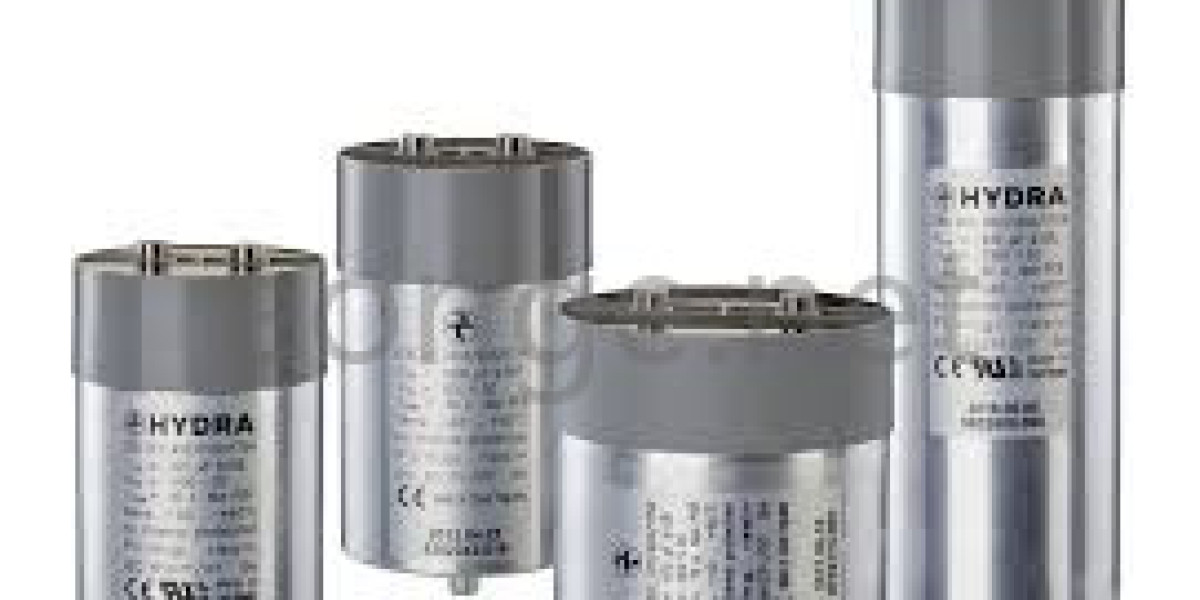

High-voltage direct-current transmission uses power-electronic converters to move electrical energy efficiently over long distances and between asynchronous networks. Within these installations, a HVDC Capacitor Device may perform functions such as energy buffering, voltage stabilization, ripple management, filtering, or support for converter subassemblies, depending on the circuit topology. Its electrical duty is different from that of a conventional power-frequency capacitor, so selection must begin with the converter design, the expected waveform, and the specific location of the component in the system.
HVDC converter stations contain equipment exposed to demanding electrical conditions. Capacitors may be used in smoothing circuits, DC-link arrangements, filters, snubber networks, and auxiliary power-electronic assemblies. Each position imposes its own requirements for capacitance, voltage withstand, current ripple, pulse loading, thermal behavior, and service life. Engineers need to evaluate the complete electrical duty, including transient and repetitive stresses.
The dielectric system is a primary determinant of performance. Film capacitors commonly use polypropylene because of its favorable dielectric strength, low dissipation factor, and ability to handle repeated electrical stress when properly designed. Metallized film construction can provide a self-healing response: when a localized dielectric fault occurs, the thin electrode around the defect may vaporize and isolate the affected area. This mechanism can help preserve operation after limited events, but it does not remove the need for correct voltage derating, thermal design, and protection coordination. For high-energy applications, electrode thickness, winding structure, and current-carrying paths must be engineered for the required duty.
A capacitor assembly also depends on its enclosure, terminals, internal connections, insulation supports, and cooling path. Mechanical design must withstand transport vibration, installation forces, and electromagnetic forces associated with high currents. Low-inductance connections are important in fast-switching circuits because parasitic inductance can contribute to voltage overshoot. Depending on the application, the product may be configured as a single element or as a multi-element assembly.
In a converter circuit, capacitance influences how voltage and current vary during switching and changes in power flow. A DC-link capacitor, for example, can help stabilize the local DC voltage and supply or absorb short-duration energy differences between circuit stages. Filter capacitors are selected to work with inductive elements to attenuate unwanted ripple or harmonic components. Snubber capacitors may limit the rate of voltage change across switching devices and help control transient energy. These functions are topology-dependent, and their effectiveness must be verified through circuit simulation and system-level analysis.
Thermal management is central to capacitor life. Dielectric losses, ripple current, connection resistance, and surrounding equipment all contribute to temperature rise. Excessive operating temperature can accelerate insulation aging and reduce expected service life. Designers should consider ambient temperature, airflow, cooling arrangement, enclosure ventilation, and heat transfer from adjacent components. In compact converter equipment, local hot spots may not be represented by the room's average temperature, so thermal measurements and validated design models are valuable during qualification and commissioning.
Electrical coordination must address both steady-state and transient conditions. The component may experience switching surges, polarity-related stresses in certain circuit arrangements, repetitive pulses, and temporary overvoltage events. Insulation coordination should therefore consider the system's grounding method, surge protection, switching strategy, and fault-clearing behavior. Engineers should also evaluate equivalent series resistance, equivalent series inductance, permissible ripple current, and the frequency spectrum of the applied waveform.
Choosing a suitable product requires clear technical information from the system integrator or equipment manufacturer. Important inputs include the DC operating voltage, peak voltage, ripple-current profile, pulse duration, switching frequency, capacitance tolerance, permissible temperature range, expected operating hours, and required lifetime. Mechanical dimensions, terminal arrangement, cooling requirements, mounting orientation, and insulation distances should be checked against the converter cabinet or station layout.
Inspection and maintenance practices depend on whether the capacitor is accessible as a replaceable component or integrated into a sealed assembly. Before any work, the system must be isolated, discharged, and verified according to approved procedures, since stored energy may remain after shutdown. Qualified personnel can inspect terminals, supports, cooling passages, and enclosure condition, and can review operating alarms or temperature records for signs of deterioration. Capacitance and insulation tests should be carried out only with methods appropriate to the manufacturer's instructions and the connected circuit.
HVDC projects rely on coordinated engineering across converters, protection systems, cooling equipment, and station controls. Procurement decisions should therefore consider application experience, manufacturing consistency, dielectric materials, electrical testing, traceability, and technical communication. A correctly specified HVDC Capacitor Device contributes to stable converter operation when its electrical, thermal, and mechanical characteristics are matched to the actual circuit duty. Shanghai Yongjin Electric Technology Co.,Ltd. provides product information and electrical equipment options at https://www.eonge.net/product.