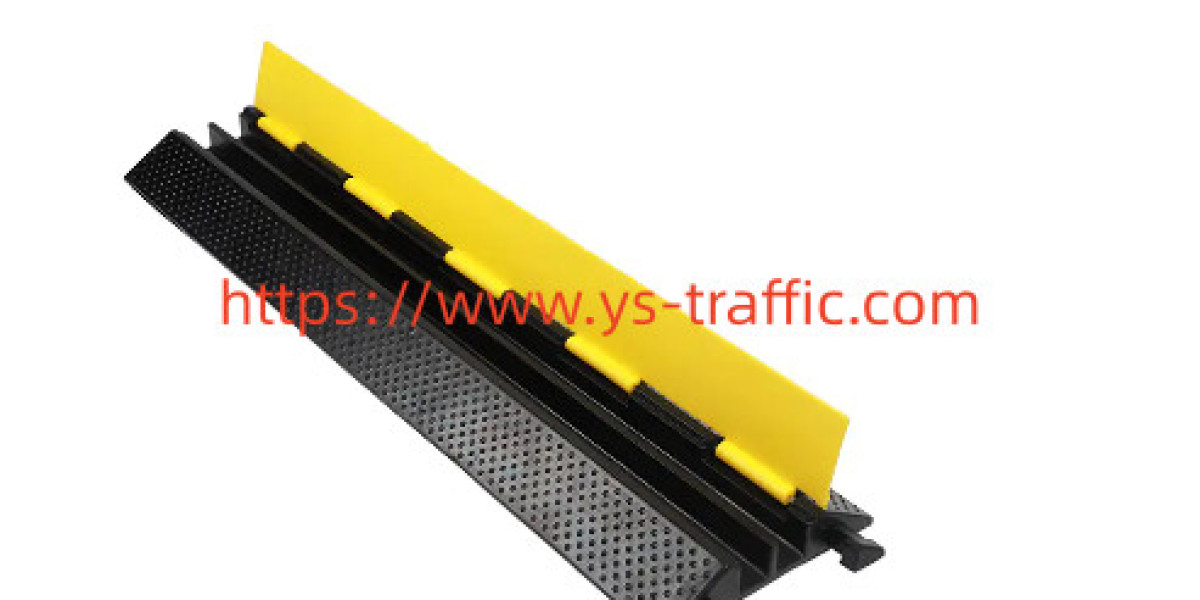

Cable Protector Ramp products are used in construction projects, industrial facilities, warehouses, exhibition venues, and public events where electrical lines or hoses need protection across shared access routes. For importers and wholesale distributors, selecting a suitable model involves more than comparing product dimensions and quotations. Buyers should also evaluate the manufacturer's production capabilities, specification management, sample arrangements, customization options, and communication process. A structured purchasing review helps both parties establish clear expectations before production begins.
Check Whether the Manufacturer Understands Your Application
A reliable purchasing discussion should begin with the actual project requirements. Buyers should explain where the product will be installed, what type of traffic will pass over it, and how frequently the area will be used.
For example, an event equipment supplier may need portable sections for temporary installations, while an industrial distributor may serve customers requiring products for regular vehicle crossings. These applications can involve different structural and dimensional requirements.
Ask the manufacturer whether its available configurations correspond to your intended use. Providing photographs of the installation area, project drawings, and information about expected traffic can make the discussion more specific.
Manufacturers should also be able to explain the intended application and limitations of each model. This helps purchasing teams avoid selecting a product based only on its appearance or general description.
Request Complete Technical Specifications
Before comparing quotations, collect the technical information for each proposed model. Overall length, width, height, internal compartment dimensions, number of channels, and product weight are useful starting points.
The dimensions of the lines being protected should also be measured. Buyers need to consider the outside diameter of each line, including its insulation or outer covering. If several lines will share the same installation area, confirm the required compartment arrangement.
Load capacity deserves separate attention. Ask whether the stated rating refers to a wheel, axle, or complete vehicle, and request information about the relevant testing conditions. Different rating methods should not be compared as if they represent the same measurement.
A complete specification sheet gives buyers a practical reference for comparing models and checking whether the proposed configuration matches the project.
Evaluate Materials and Manufacturing Details
Material selection can influence product weight, flexibility, surface characteristics, and suitability for different environments. Buyers should ask about the composition of the main body, moulding procedures, and the manufacturer's approach to dimensional control.
For outdoor projects, discuss exposure to sunlight, rain, temperature changes, and other environmental conditions. For indoor installations, surface contact, handling, and appearance may receive greater attention.
It is also useful to ask how the manufacturer checks the finished product. Relevant inspection points may include overall dimensions, compartment structure, surface condition, connection features, and lid alignment where applicable.
Rather than relying on general descriptions, request specific information about the production and inspection process. This makes it easier for procurement teams to assess whether the supplier can support their quality requirements.
Examine Samples Before Confirming a Large Order
Sample evaluation gives buyers an opportunity to inspect details that may not be clear in photographs or catalogue descriptions.
During the review, check the dimensions, surface texture, internal space, opening and closing operation, and connection structure. If the product will be installed in a particular location, compare the sample with the actual site layout.
Buyers can also prepare a sample evaluation record containing photographs, measurements, and comments from the technical team. This document can become a reference when reviewing production goods.
For distributors, sample approval is especially useful when introducing a new product category or developing a private-label range. Confirming the specifications before bulk production can reduce misunderstandings about the expected appearance and configuration.
Discuss Customization and Packaging Requirements
Different markets may have different requirements for product colors, labels, dimensions, and packaging. Buyers should communicate these preferences before production rather than waiting until the order is nearly complete.
If custom colors or private-label packaging are required, ask about available options, artwork preparation, minimum quantities, and any additional production arrangements.
Packaging should also be reviewed from a logistics perspective. Confirm the quantity per carton, carton dimensions, gross weight, product identification, and shipping marks. These details can influence warehouse handling, container loading, and inventory management.
For buyers supplying multiple customer groups, clear product identification can make stock organization and order fulfilment easier. Written packaging instructions also give the manufacturer a consistent reference for repeat orders.
Compare Quotations and Production Arrangements
A competitive quotation should be evaluated according to the complete supply arrangement rather than unit price alone. Buyers should compare the product specification, included accessories, sample costs, customization, minimum order quantity, packaging, and delivery terms.
Ask about the estimated production schedule and how changes to an approved specification will be handled. If an order includes several models, confirm whether they can be produced and packed according to separate item references.
Payment arrangements, shipping responsibilities, and required export documents should also be discussed before confirming the purchase. Keeping these details in written communication helps both parties follow the same order requirements.
For long-term distributors, it can be useful to discuss repeat-order procedures and how approved specifications will be maintained across future batches.
Build a Clear Supplier Communication Process
Good communication supports each stage of a wholesale transaction, from the initial enquiry to delivery. Buyers should identify one contact person for technical questions, sample feedback, order confirmation, and shipping updates.
A complete enquiry should include the intended application, required dimensions, number of channels, expected traffic, material preferences, estimated quantity, and destination market. Drawings or photographs can provide additional context when the installation is complex.At ys-traffic, international buyers can discuss product configurations, manufacturing details, customization, and wholesale supply requirements according to their project needs. Preparing these details before requesting a quotation helps create a clearer purchasing process. Buyers interested in reviewing available products and discussing cooperation can visit https://www.ys-traffic.com/ to contact the manufacturer and obtain further product information.