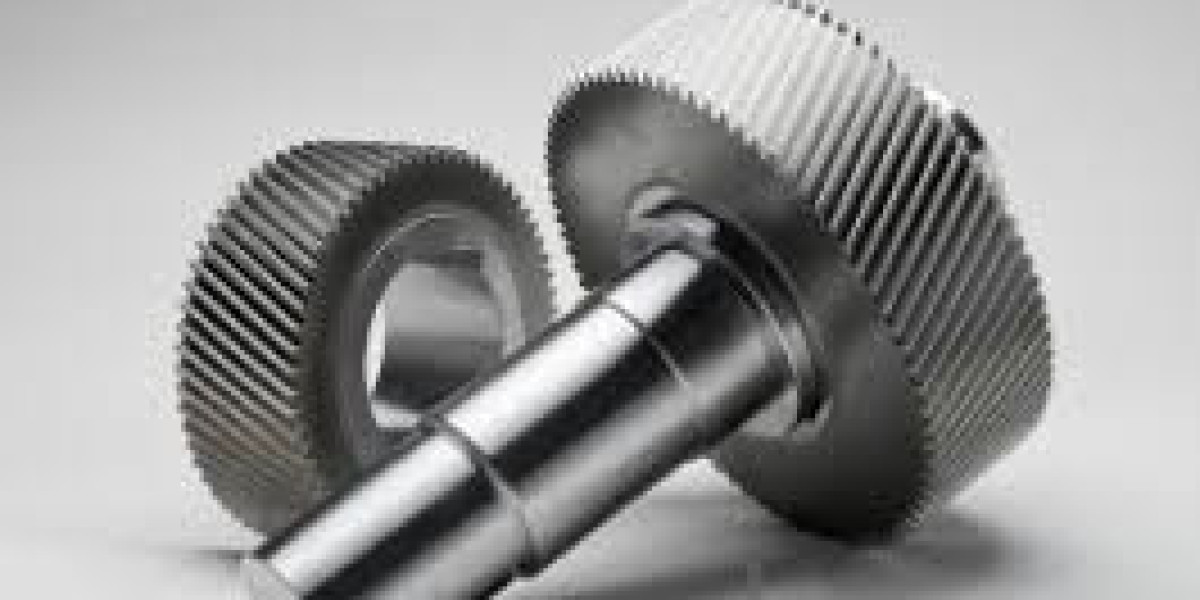

Industrial machinery relies on mechanical transmission systems to convert power into controlled movement. In applications where rotational input must produce accurate linear displacement, a Helical Rack provides a transmission structure designed around progressive tooth engagement. Its angled tooth arrangement allows contact to develop gradually as the mating gear rotates, helping support smooth movement and consistent force transfer. This design is relevant to equipment manufacturers seeking dependable motion control across automated production, material handling, and specialized machinery.
The operating principle is based on the relationship between the rack and its mating pinion. As the pinion rotates, its teeth engage with the rack teeth to create linear movement. The angled geometry changes how contact develops during rotation, allowing engagement to progress along the tooth surface. This can reduce abrupt contact compared with a straight-tooth arrangement and contribute to smoother operation when the transmission is properly designed and assembled.
Material selection is an important starting point in manufacturing. Transmission components experience repeated mechanical loads and contact, so the material must provide suitable strength, wear resistance, and dimensional stability. Steel is commonly used for industrial gear applications because its mechanical properties can be adapted through material selection and processing. The appropriate material depends on the intended working environment, expected loading conditions, and maintenance requirements.
Zhejiang Yuchen Transmission Technology Co., Ltd. considers material preparation and process consistency important parts of transmission component manufacturing. A stable material foundation helps support later machining operations and contributes to predictable production results. Manufacturers must also consider the relationship between material characteristics and subsequent processing methods, since differences in hardness and structure can influence machining behavior and finishing quality.
Tooth geometry directly affects how the mating components interact. The profile, spacing, angle, and surface condition of the teeth influence contact distribution and force transmission. If these features are inconsistent, the contact pattern may become uneven, potentially causing additional friction, vibration, or localized wear. Accurate machining helps maintain the intended geometry and supports reliable engagement throughout repeated operating cycles.
Manufacturing accuracy requires coordinated production stages. Initial cutting establishes the basic form, while subsequent machining refines important dimensions and working surfaces. Depending on the application, additional finishing processes may be used to improve surface quality and dimensional consistency. Each operation should be controlled to prevent variations from accumulating and affecting the final component.
Installation conditions are equally important. The rack must be mounted on a suitable supporting surface and aligned correctly with the mating pinion. If the mounting base is uneven or the assembly lacks sufficient rigidity, tooth contact may become inconsistent. This can increase stress in localized areas and reduce the stability of the transmission. Equipment designers should therefore consider mounting accuracy and structural support during the early stages of machine development.
Lubrication helps manage friction between moving tooth surfaces. The lubrication method should reflect the working environment, operating frequency, load, and surrounding conditions. Dust, metal particles, and other contaminants can interfere with normal contact, so suitable protection and regular maintenance are important. Inspections can help identify unusual noise, vibration, surface damage, or changes in movement before they develop into more serious operating problems.
Linear transmission systems are used in many industrial applications. Automated production equipment may require repeatable movement to position tools, workpieces, or processing units. Packaging machinery depends on coordinated movement to maintain the relationship between feeding, forming, and sealing operations. Material-handling systems may use mechanical transmission to move platforms and carriers along defined paths. In each case, the transmission component must match the machine's operating requirements.
Selection should begin with a review of the complete application. Engineers need to understand the required movement, load characteristics, operating cycle, installation space, and environmental exposure. Compatibility with the mating gear is essential, while maintenance access and replacement requirements should also be considered. A component that works effectively in one machine may not provide the same results in a different configuration.
Quality control supports consistency from production to final assembly. Dimensional inspection, tooth profile evaluation, and surface checks help verify that components meet manufacturing requirements. Clear inspection procedures also make it easier to identify production variation and maintain dependable results across batches. Zhejiang Yuchen Transmission Technology Co., Ltd. emphasizes manufacturing control as part of providing transmission components for different industrial applications.
When evaluating a Helical Rack, buyers should consider tooth geometry, material suitability, manufacturing consistency, and compatibility with the complete drive assembly. Proper installation, lubrication, and maintenance further influence long-term performance. These connected factors help determine whether a transmission solution can meet the practical demands of industrial equipment. More information about available products and manufacturing capabilities can be found at https://www.yc-rack.com/product/spur-gear-rack/