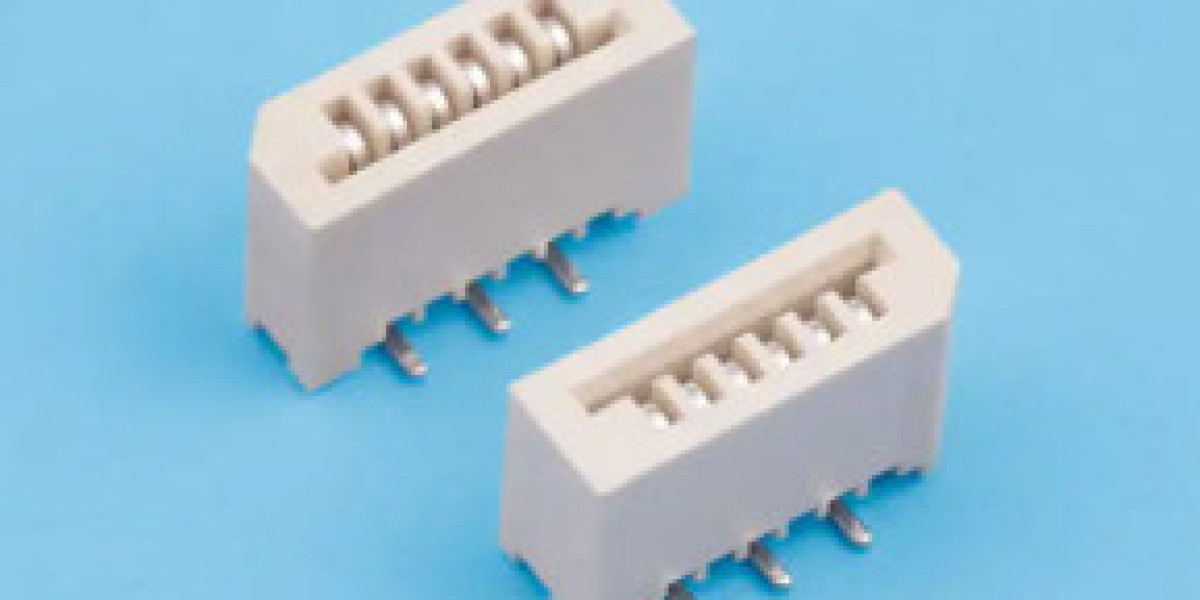

Board to Board Power Connector selection plays an important role in transferring electrical energy between separate circuit assemblies. For purchasing teams, choosing a suitable component involves more than checking external dimensions or unit price. Current capacity, contact arrangement, installation space, material options, and assembly conditions all deserve attention. A clear understanding of these factors helps buyers communicate their requirements and evaluate whether a proposed product matches the intended application.
Calculate the Required Current Capacity
The electrical load should be one of the first details buyers confirm. Start by identifying the working voltage, continuous current, and possible peak current during equipment operation. These values help manufacturers assess the required contact structure and electrical configuration.
Buyers should also ask how the current rating was determined. Test conditions, ambient temperature, contact resistance, and the number of energized positions can influence actual performance. A rating shown in a product specification should therefore be reviewed together with its applicable conditions.
If several terminals will carry current at the same time, their arrangement should be discussed with the engineering team. This helps avoid relying on assumptions about how the electrical load will be distributed.
Decide How Terminals Will Be Arranged
Some applications require energy transmission only, while others combine this function with signal connections. This difference affects the number of terminals, their positions, and the internal configuration.
Before requesting a quotation, prepare a clear pin assignment. Identify which positions are intended for positive terminals, ground, and signal functions. If certain positions will remain unused, include that information in the drawing.
Buyers should also consider whether the design may need additional functions in a future revision. Discussing possible changes at an early stage can help the manufacturer evaluate available configurations and reduce the need for major structural adjustments later.
Measure the Available Installation Space
Compact equipment often has limited internal clearance. Buyers should measure the available footprint, component height, mounting area, and distance between connected circuit assemblies.
Mating height is another important specification. If the selected component is too tall, it may interfere with the enclosure or nearby parts. If the height is insufficient, other components may not fit into the intended arrangement.
Installation direction should also be confirmed. Vertical stacking, horizontal positioning, and right-angle connections may require different structures. Providing dimensional drawings or three-dimensional files can help the manufacturer review the proposed arrangement before sample development.
Compare Contact and Housing Materials
Material selection can influence conductivity, wear behavior, corrosion resistance, and mechanical strength. Buyers should ask which conductive alloys and surface finishes are available for the contact terminals.
The insulating housing also needs to suit the operating environment. Temperature variation, humidity, vibration, and exposure to chemicals may affect material requirements. A component intended for an indoor consumer device may need different characteristics from one used in industrial equipment.
Rather than choosing materials based only on appearance or price, buyers should explain the working conditions and expected service life. The manufacturer can then discuss suitable options according to the project specifications.
Consider the Assembly Process
A product that meets electrical requirements must also fit the planned manufacturing process. Buyers should confirm whether the termination method is suitable for their assembly equipment and production workflow.
For surface-mount applications, the footprint, placement accuracy, and soldering conditions should be reviewed. Other mounting methods may require attention to hole dimensions, terminal positioning, and mechanical support.
Alignment features are also worth discussing. During mating, the two connected parts should engage in the intended position without placing unnecessary stress on contacts or solder joints. If the equipment will be assembled repeatedly, buyers should ask about insertion force, removal force, and mating cycle specifications.
Evaluate Samples Before Confirming Production
Sample testing allows purchasing teams to check whether the proposed component meets the agreed requirements. Start with dimensional inspection and confirm that the product fits the intended installation area.
Next, review contact engagement, electrical continuity, and assembly convenience. Depending on the application, additional evaluation may include current loading, temperature rise, insulation performance, vibration resistance, and repeated mating.
Before testing begins, both parties should agree on inspection methods and acceptance criteria. Any adjustments should be recorded in updated drawings or written specifications. This provides a clear reference when the order moves into regular production.
Review the Supplier's Production Arrangements
A quotation should be evaluated alongside the manufacturer's production capabilities. Buyers can ask about material inspection, manufacturing equipment, process controls, finished-product testing, and batch traceability.
Communication is equally important. The supplier should be able to review technical drawings, clarify unclear specifications, and explain how requested changes may affect cost or delivery schedules.
Purchasing teams should also confirm minimum order quantities, sample charges, packaging details, lead times, and after-sales procedures. Comparing suppliers against the same technical requirements makes the evaluation more consistent and helps avoid unexpected differences after an order is placed.
Discuss Your Project with wendaelectronics
Preparing complete technical information can make supplier communication more efficient. Buyers should organize current requirements, voltage ratings, contact assignments, installation dimensions, material preferences, and estimated order quantities before requesting a quotation. These details give the manufacturer a clearer understanding of the intended application and provide a practical basis for discussing product options. To review available products and manufacturing information, visit https://www.wendaelectronics.com/ and contact wendaelectronics about your project requirements.







