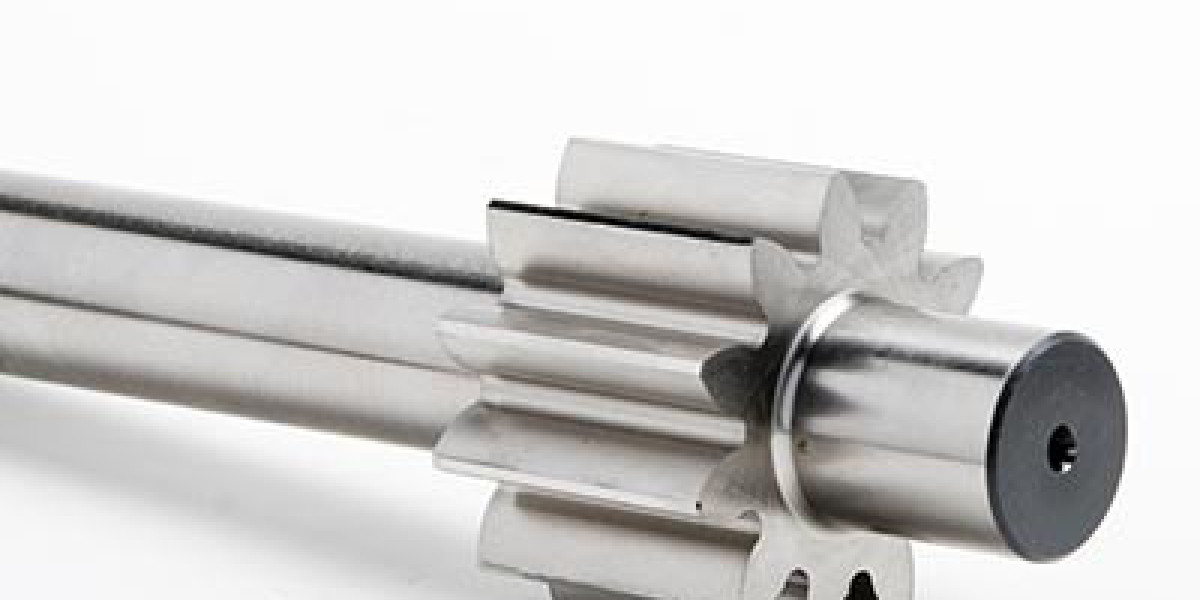

Reliable motion transmission depends on how effectively mechanical components convert rotational input into controlled linear movement. In machinery that requires consistent positioning and coordinated operation, a Helical Rack can contribute to smoother engagement and more stable force transfer. Its angled tooth geometry creates a gradual contact process between the mating components, helping reduce abrupt engagement and supporting dependable movement in demanding industrial environments. Understanding the design, manufacturing, and application of this transmission structure helps equipment designers make better decisions when developing mechanical drive systems.
The fundamental difference between helical and straight-tooth transmission lies in the orientation of the teeth. Rather than engaging across the entire tooth width at once, angled teeth enter contact progressively. This gradual engagement can distribute the transmission load more continuously and reduce the impact associated with sudden contact. In applications involving frequent movement, controlled positioning, or repeated operating cycles, smoother engagement can contribute to more consistent mechanical behavior.
Material selection is an important part of manufacturing reliable transmission components. The material must withstand repeated contact, friction, and operating loads while maintaining dimensional stability. Depending on the working environment, manufacturers may consider different steel grades and material treatments to achieve an appropriate balance of strength, wear resistance, and machinability. The choice should reflect the actual application rather than relying on a single material solution for every machine.
At Zhejiang Yuchen Transmission Technology Co., Ltd., material preparation and manufacturing control are important considerations in producing mechanical transmission components. A consistent starting material helps establish a dependable foundation for subsequent machining operations. Surface condition, internal material quality, and processing stability can all influence the final component. Careful inspection throughout production helps identify potential issues before they affect assembly or equipment operation.
Tooth geometry also plays a central role in transmission performance. The angle, profile, spacing, and surface finish of the teeth influence how two mating components interact. If the geometry is inconsistent, contact may become uneven, potentially increasing friction, vibration, or localized wear. Precision machining helps maintain the intended tooth form and supports predictable engagement throughout the operating cycle.
Grinding and finishing processes may be used when an application requires improved tooth surface quality and dimensional consistency. These operations help refine the contact surfaces after earlier manufacturing stages. A controlled finishing process can reduce surface irregularities that might otherwise affect movement. However, the final quality depends on the entire production sequence, including machining preparation, equipment condition, process management, and inspection procedures.
Installation is another factor that influences the performance of a transmission assembly. Even well-manufactured components may operate poorly if alignment is inaccurate or the supporting structure lacks sufficient rigidity. Mounting surfaces should provide stable support, while the mating gear should be positioned to maintain appropriate contact. Incorrect alignment can lead to uneven loading and unnecessary wear. Equipment designers should therefore consider mounting accuracy and structural support as part of the overall transmission design.
Lubrication and maintenance practices also affect long-term operation. Contact between moving teeth produces friction, and suitable lubrication helps manage this interaction. The lubricant should be compatible with the operating conditions, including load, speed, temperature, and surrounding environment. Regular inspection can help detect unusual noise, surface damage, contamination, or changes in movement quality before they develop into more serious mechanical problems.
These transmission components are used in a wide range of industrial equipment. Automated production lines may rely on controlled linear movement to position workpieces, tools, or material-handling assemblies. Packaging machinery can use coordinated transmission systems to maintain repeatable movement during continuous production. Robotics, lifting equipment, and specialized machine tools may also require mechanical solutions that combine stable engagement with accurate positioning.
Application requirements should guide the selection process. Designers need to evaluate the operating load, movement frequency, installation space, environmental conditions, and required positioning behavior. A transmission system used in a clean indoor production area may face different challenges from one exposed to dust, moisture, or temperature changes. Considering these conditions early can help reduce compatibility problems and support more reliable equipment integration.
Manufacturing consistency is equally important when components are used in replacement or maintenance programs. Interchangeable parts help reduce equipment downtime and simplify service procedures. This requires stable production methods, clear quality-control standards, and careful management of dimensional accuracy. Zhejiang Yuchen Transmission Technology Co., Ltd. focuses on transmission component manufacturing to support different industrial requirements, with attention to machining quality and practical application needs.
For engineers and equipment manufacturers, selecting a suitable Helical Rack involves considering the complete transmission assembly rather than evaluating one component in isolation. Compatibility with the mating gear, installation structure, lubrication method, and operating environment all influence the result. To learn more about available transmission solutions and manufacturing capabilities, visit https://www.yc-rack.com/product/spur-gear-rack/