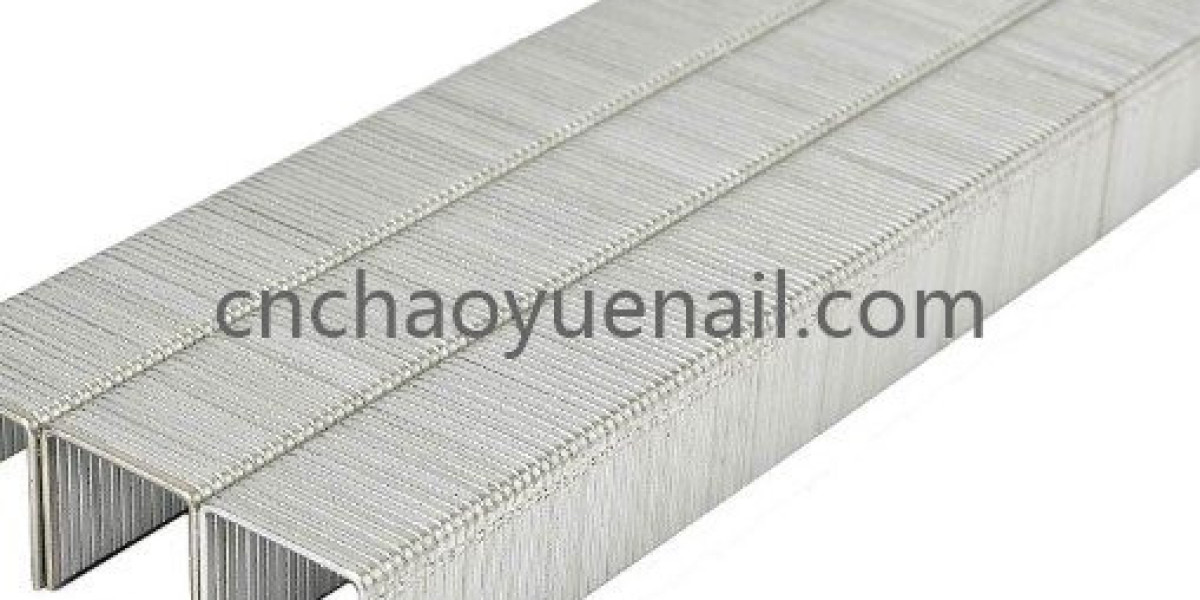

In furniture production, upholstery work, packaging, and other assembly operations, fastening consistency has a direct influence on production efficiency and finished-product quality. Fine Wire Staples are used in applications where a relatively slender fastening profile is required to secure fabrics, thin boards, insulation materials, and other suitable substrates. Their performance depends on the relationship between steel quality, wire preparation, forming accuracy, and compatibility with the fastening equipment.
Material selection is the foundation of reliable staple manufacturing. Steel wire must have consistent mechanical properties and a suitable surface condition to support stable processing. Variations in wire composition, hardness, or surface cleanliness can affect feeding and forming operations. Manufacturers therefore need to evaluate incoming materials before production, checking for visible defects and consistency against internal quality requirements. Proper material management helps reduce interruptions and supports repeatable product quality across different batches.
Wire preparation involves several coordinated operations. Drawing processes help establish the required wire profile, while straightening equipment improves material alignment before automated feeding. Lubrication can reduce friction during processing and support smoother movement through production machinery. The prepared wire then enters forming equipment, where cutting and bending operations create the staple crown and legs. Accurate coordination between these stages is important because irregular cutting or bending may affect the finished staple shape and its ability to feed through compatible tools.
Production equipment and tooling condition also influence consistency. Cutting blades, forming dies, and feeding guides are exposed to repeated mechanical stress. Over time, wear can cause burrs, uneven edges, or variations in staple geometry. Regular maintenance helps prevent these issues from affecting larger production quantities. Manufacturers can establish inspection schedules for cleaning, alignment checks, tooling replacement, and machine calibration. Monitoring production output also allows operators to identify developing irregularities before they result in significant material waste.
The collation process is particularly important for staples used in pneumatic and electric fastening tools. Staples must be arranged and bonded consistently so that they can move through the magazine and feeding mechanism without unnecessary interruption. Inconsistent spacing, damaged bonding, or irregular shapes may cause feeding problems. Manufacturers should therefore monitor collation quality alongside the physical characteristics of individual staples. Equipment compatibility should also be confirmed because different fastening tools may require specific crown configurations, leg profiles, and collation arrangements.
Surface finishing should reflect the intended application and storage environment. Bright steel may be suitable for many indoor applications, while galvanized or other coated finishes can be considered when additional corrosion protection is required. The appropriate finish depends on the surrounding materials, humidity, storage conditions, and expected service environment. Packaging should protect the products from contamination and avoidable moisture exposure before use. Buyers should communicate their application requirements clearly so that manufacturers can recommend suitable material and finish options.
Quality inspection should take place throughout the manufacturing process. Incoming material checks help identify unsuitable wire, while in-process monitoring can detect changes in feeding, cutting, and forming performance. Finished-product inspections may examine shape consistency, surface appearance, collation condition, and other characteristics specified by the customer. Automated counting and visual inspection systems can support production efficiency, while batch records improve traceability. These procedures provide useful information when investigating customer feedback or implementing process improvements.
Packaging and supply management are also important for professional buyers. Staples may be packed in inner boxes, cartons, or larger bulk containers according to order requirements. Clear labels help distinguish product types, finishes, and production batches. Consistent packaging arrangements make it easier for wholesalers and manufacturers to manage warehouse inventory and replenish frequently used products. Export orders may require additional attention to moisture protection, carton strength, and transportation handling.
Manufacturers can also improve operational efficiency through responsible material management. Accurate wire feeding and forming reduce avoidable steel waste, while recoverable scrap can be separated for recycling. Preventive equipment maintenance helps limit rejected products, and efficient packaging planning can reduce unnecessary material consumption. These practices contribute to a more organized production system while supporting stable product quality.
For distributors, furniture manufacturers, and industrial buyers, Fine Wire Staples should be evaluated through material consistency, forming accuracy, collation quality, and compatibility with the intended fastening equipment. Providing clear information about application materials, tool models, preferred finishes, and packaging requirements helps suppliers identify suitable product options. To explore available fastening products and manufacturing capabilities, visit https://www.cnchaoyuenail.com/product for further information.






