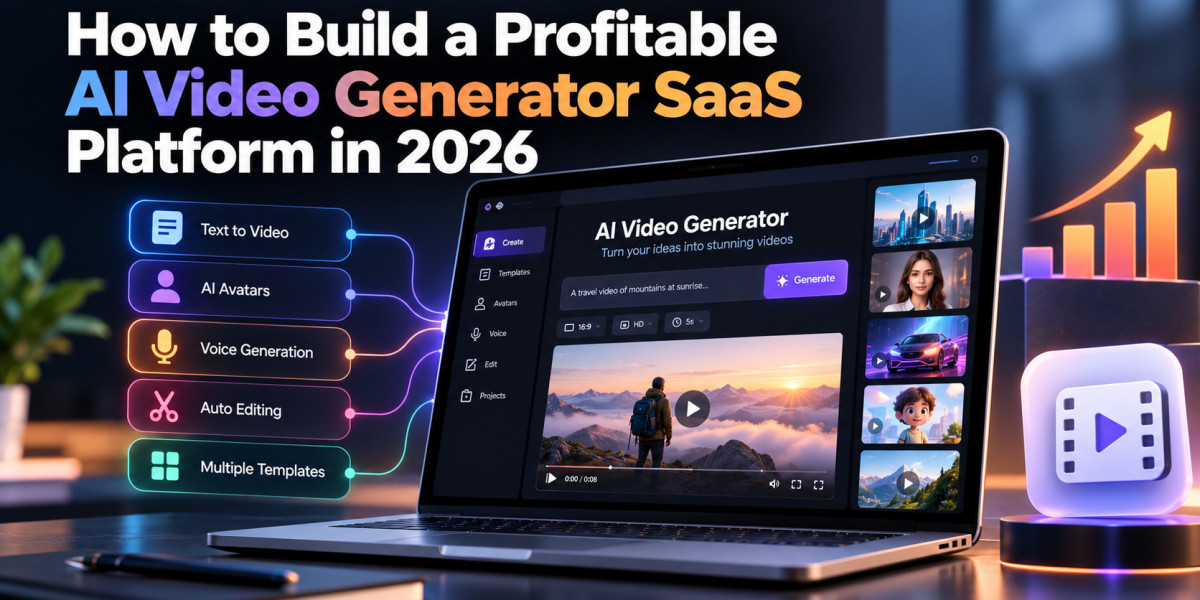

Artificial intelligence is transforming video production by making content creation more accessible, efficient, and scalable. Businesses can now generate presenter-style videos, marketing materials, educational content, and product demonstrations without organizing traditional video shoots for every project.
This transformation creates opportunities for entrepreneurs looking to launch AI-powered software businesses. Instead of offering basic video editing tools, startups can develop platforms that combine AI avatars, synthetic voices, multilingual support, workflow automation, and subscription-based services.
However, building a successful AI video generator requires more than integrating an AI model. Founders must understand customer requirements, development architecture, operational costs, and sustainable monetization strategies.
This guide explains how to build an AI video generation SaaS business, what features matter most, and how related AI technologies can support long-term growth.
What Is an AI Video Generator SaaS Platform?
An AI video generator SaaS platform is a cloud-based application that allows customers to create videos using artificial intelligence.
Users typically provide a script, select a digital avatar or video format, configure voice settings, and submit a generation request. The platform processes the information through connected AI services and produces a video.
Businesses can access these services through subscription plans, prepaid credits, or usage-based billing.
Entrepreneurs interested in launching a branded service can explore a White Label AI Video Generator that provides an existing platform foundation with customization and operational management capabilities.
Unlike standalone video-generation tools, a complete SaaS business also needs billing, user management, analytics, security, and customer support systems.
Why AI Video Generation Offers Business Opportunities
Organizations regularly need video content for communication, training, advertising, and customer education.
Producing this content traditionally requires resources for scripting, recording, editing, and distribution.
AI-powered platforms can simplify several stages of production.
Marketing and Advertising
Marketing teams can generate product explainers, promotional messages, and campaign variations without recording every version separately.
Corporate Training
Companies can produce onboarding lessons, internal announcements, and instructional videos using approved scripts and reusable templates.
Online Education
Educational businesses can develop presenter-led lessons and adapt existing material for different audiences.
Multilingual Content
AI-assisted voice generation and localization can help organizations prepare content for customers across different regions.
These applications create demand for platforms that deliver consistent quality, predictable costs, and reliable workflows.
Step 1: Select Your Target Market
Before investing in development, founders should identify a specific customer segment.
An AI video platform designed for marketing agencies may require multi-client workspaces, brand templates, and high-volume exports.
A platform serving educational institutions may prioritize lesson organization, subtitles, multilingual narration, and content revisions.
Corporate customers may need access permissions, audit logs, approval workflows, and centralized billing.
Choosing a focused audience makes it easier to determine which features should be developed first.
Startups should validate their assumptions through customer interviews, competitor research, and small product demonstrations.
Step 2: Choose the Right AI Platform Architecture
AI video generation involves multiple technical components working together.
A typical workflow includes script submission, voice generation, avatar rendering, video processing, file storage, and export management.
These processes may require external AI services, background workers, databases, and cloud infrastructure.
Founders can also investigate broader AI and Automation Solutions to understand how different AI capabilities can be integrated into commercial software platforms.
Important architectural considerations include:
Secure connections to AI service providers
Background processing for video rendering
Storage management for generated files
API usage monitoring
Error handling and generation retries
Subscription and usage-limit enforcement
A modular architecture allows businesses to replace or upgrade individual AI providers without redesigning the entire application.
Step 3: Implement Essential AI Video Features
A competitive platform should make video creation straightforward while providing enough flexibility for professional users.
Script-to-Video Generation
Users should be able to enter text, select a presentation format, and generate videos through a guided workflow.
AI Avatars and Voice Selection
Presenter avatars and synthetic narration can support training videos, tutorials, and marketing presentations.
A HeyGen Clone represents one reference model for entrepreneurs exploring AI avatar video generation platforms.
Multilingual Localization
Translation, subtitles, and voice localization can help businesses adapt content for international audiences.
Video Templates
Reusable templates reduce repetitive setup and help customers maintain consistent brand presentation.
Workspace Collaboration
Organizations should be able to invite team members, assign roles, and organize projects according to departments or clients.
Analytics and Administration
Usage reports, generation histories, billing records, and administrative controls help operators manage their SaaS business.
Step 4: Integrate AI Assistants and Content Automation
AI video production becomes more useful when customers can automate activities surrounding the generation process.
For example, an AI assistant could help users prepare initial scripts, organize content ideas, summarize source material, or rewrite approved text for different audiences.
An Apple AI ReALM Clone provides a reference for AI assistant and conversational platform capabilities that entrepreneurs may explore as complementary services.
A practical content workflow could involve generating a script draft, reviewing it for accuracy, selecting a video template, and submitting the approved content for rendering.
However, AI-generated scripts should be reviewed before publication, especially when they contain product claims, educational information, or regulated content.
AI assistance should improve productivity without replacing necessary human oversight.
Step 5: Add Conversational AI for Smarter Workflows
Conversational AI can help users manage research, script preparation, and content revisions.
For example, a marketing team could ask an AI assistant to summarize product information, generate script variations, or suggest different presentation approaches.
A DeepSeek Clone provides a reference for conversational AI capabilities that businesses could evaluate for complementary content workflows.
Such features should remain optional and clearly separated from the actual video rendering process.
This distinction allows entrepreneurs to manage different AI providers, control costs, and improve individual services without disrupting the entire platform.
Step 6: Choose a Sustainable Monetization Model
AI video SaaS platforms can generate revenue through multiple approaches.
Subscription Plans: Offer monthly or annual packages with predefined generation limits.
Usage-Based Credits: Charge customers according to video duration, rendering consumption, or generation activity.
Agency Packages: Provide separate client workspaces, collaboration tools, and increased export allowances.
API Access: Allow other applications to integrate video generation through paid API usage.
Enterprise Plans: Offer customized workflows, administrative permissions, and dedicated support.
Pricing should account for AI provider charges, rendering infrastructure, storage, bandwidth, and customer service costs.
Step 7: Test and Launch Your AI Video Platform
Before commercial launch, founders should test the complete customer experience.
Evaluate script processing, avatar generation, video rendering, payment integration, export functionality, and account permissions.
Test failed generation requests and confirm that customers are not incorrectly charged for unsuccessful jobs.
Security reviews should include API authentication, data storage, access restrictions, and protection against unauthorized content generation.
Platforms offering custom avatars or voice cloning must also establish consent verification, synthetic media policies, and suitable moderation processes.
After launch, monitor customer retention, generation success rates, infrastructure expenses, and subscription conversions.
These measurements help determine where the platform needs improvement.
Conclusion
Building an AI video generator SaaS business in 2026 requires a combination of reliable generation technology, practical workflow automation, and sustainable business planning.
Successful platforms should prioritize specific customer needs, predictable pricing, secure operations, and consistent video production quality.
AI assistants and conversational technologies can complement video generation, but the primary product should remain focused on solving a clearly defined customer problem.
Miracuves offers customizable AI platform solutions for entrepreneurs looking to build branded video generation and automation businesses.
Ready to Launch Your Own AI Video Generator?
Schedule a free consultation to discuss your SaaS business model, AI integrations, essential features, and deployment requirements.