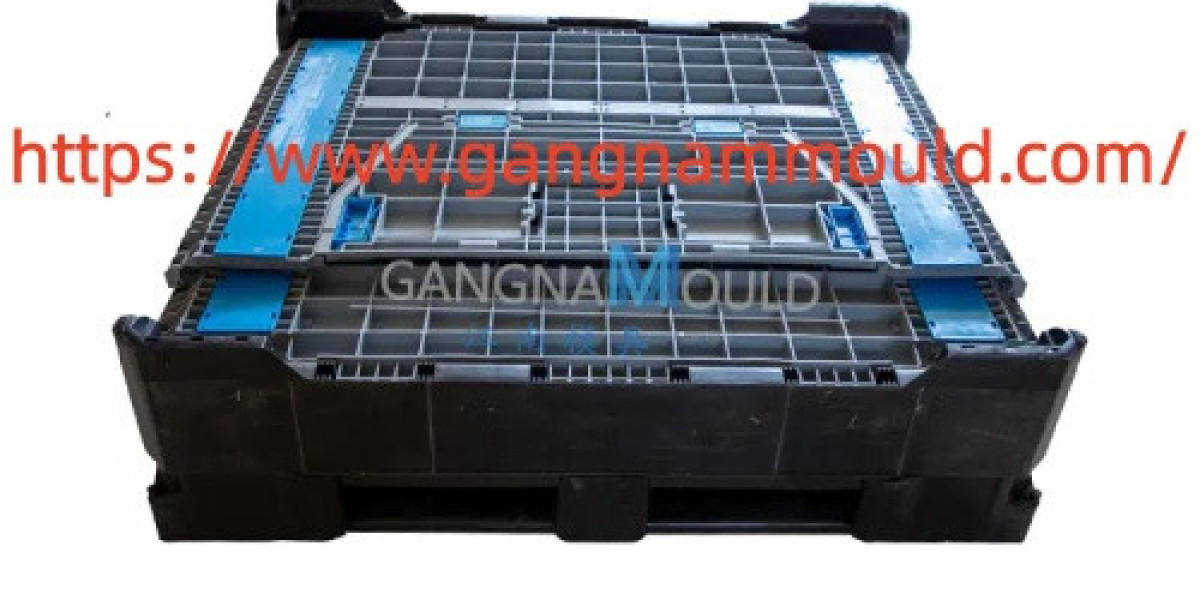

Logistic Pallet Mould selection should begin with the intended application rather than the tooling quotation alone. Buyers need to consider pallet dimensions, load requirements, resin characteristics, rib structure, cavity arrangement, cooling, ejection, production volume, and machine compatibility. Because pallets may be handled by forklifts, pallet trucks, conveyors, and automated systems, dimensional accuracy and structural design need to correspond with the operating environment. A clear technical review before machining can help manufacturers identify potential concerns and establish practical tooling requirements.
The first step is to confirm the pallet drawing. Buyers should provide accurate CAD files, overall dimensions, load expectations, tolerances, surface requirements, resin information, and anticipated production quantities. Details such as entry openings, support feet, ribs, corners, stacking features, and drainage areas can affect the internal tooling structure. Reviewing these elements together helps engineers understand how the finished product should function and how the cavity and core can be arranged around the design.
Material selection is another important consideration. Common pallet materials include polypropylene and high density polyethylene, while specific applications may require different grades or additives. Resin choice can influence flow behavior, shrinkage, impact performance, processing temperature, and finished dimensions. Buyers should identify the intended material before the tooling structure is finalized. If recycled content or different resin grades are expected during production, those plans should also be discussed because processing characteristics may vary.
Pallet geometry deserves particular attention because these products often contain extensive rib networks. Ribs provide structural support while helping control material usage, but their thickness, position, and connection points need to work with the surrounding wall structure. Large differences in section thickness can contribute to uneven cooling and dimensional changes. A balanced design can help create more predictable molding conditions while maintaining the intended load carrying structure.
Stacking features are also worth reviewing. Reusable pallets may need to stack securely when empty or loaded, depending on the logistics system. Buyers should consider how feet, corners, locating features, and upper surfaces interact during stacking. Small dimensional differences can affect how multiple units fit together, especially when pallets are used with automated handling equipment. The tooling should therefore be developed around the actual stacking and handling requirements rather than the product shape alone.
Forklift and pallet truck access can influence the arrangement of openings and support areas. The entry dimensions should correspond with the equipment used at the customer's facilities. If the pallet will travel through conveyors or automated storage systems, additional dimensional requirements may apply. Sharing these operating details during the engineering stage gives the tooling manufacturer useful information for evaluating structural features and critical dimensions.
Cooling design is another key area. Large pallet components contain extensive surface areas and numerous ribs, which can create different heat transfer conditions throughout the cavity. Uneven cooling may contribute to warpage or dimensional variation. Buyers can ask how cooling channels are positioned around important areas and whether the system allows practical maintenance. The cooling arrangement should work with the product geometry rather than being treated as an independent tooling feature.
Gate placement should also be discussed carefully. The entry point affects how molten resin travels through the cavity and reaches different structural sections. For a large component with multiple ribs and openings, flow distance and balance can influence filling behavior. Buyers can request an engineering review of the proposed gate configuration and discuss areas where weld lines or cosmetic concerns may appear.
Ejection is particularly important because a pallet contains many structural features. Ejector pins, sleeves, lifters, or other release mechanisms need to provide adequate support without interfering with important surfaces. The arrangement should also consider the rigidity of the finished component during release. If the pallet is not sufficiently supported during ejection, deformation may occur before it has cooled adequately.
Cavity quantity should be selected according to actual production requirements. High annual demand may justify a multi cavity arrangement, but the decision should also consider machine size, injection capacity, cycle time, installation space, and tooling investment. A clear production forecast helps manufacturers evaluate the relationship between cavity configuration and the complete manufacturing process.
Maintenance planning can influence the practical service life of the tooling. Buyers should ask about replaceable wear components, cooling connections, inserts, access points, and spare parts. Easy access to service areas can simplify routine inspection and replacement. Documentation covering maintenance intervals and replacement components can also help production teams organize future servicing.
Gangnammould works with manufacturers developing reusable plastic pallets by connecting product drawings with tooling engineering, material requirements, and production conditions. Companies preparing a new logistics project can review related tooling information at https://www.gangnammould.com/product/ and discuss dimensions, resin, load requirements, handling equipment, production volume, and machine specifications. Bringing these details together during the planning stage can help create a tooling solution that fits the actual logistics application and supports a smoother transition into production.