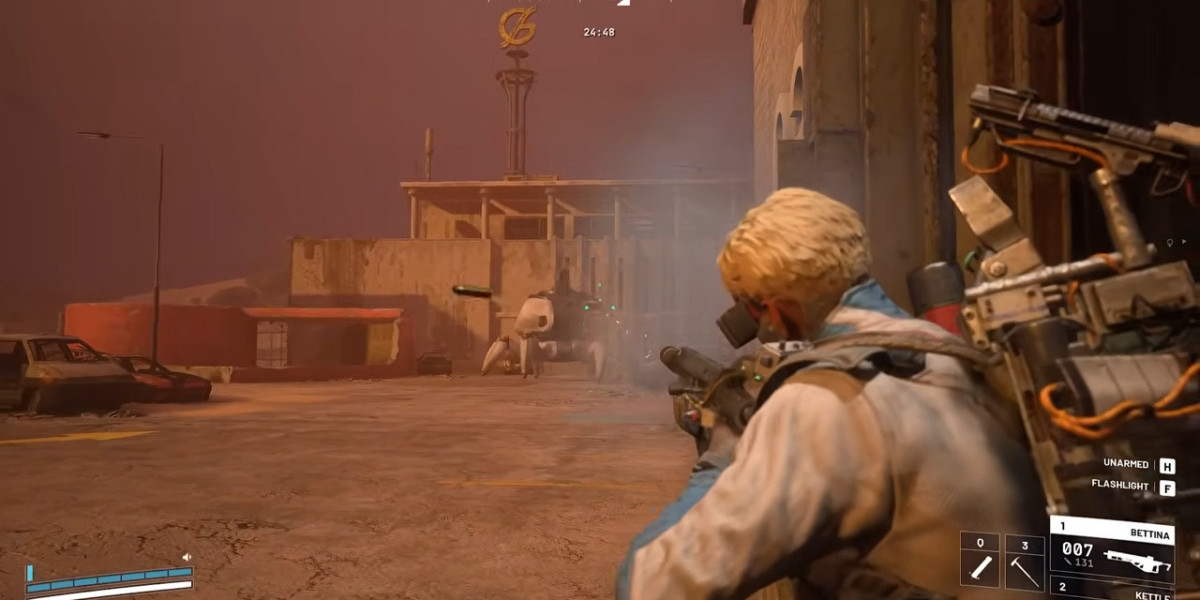
Wardogs turns money into another tactical resource because every deployment begins with a decision about what is worth taking into battle. A player can spend Wardogs Cash on weapons, ammunition, gear, utilities, and vehicles, but the most expensive loadout is not automatically the most useful one. Since equipment is purchased for individual lives and the cash economy persists between matches, understanding when to spend heavily and when to keep things simple can have a noticeable effect on how comfortably a player moves through a long match.
The interesting part is that the value of a loadout changes with the battlefield. A rifle that feels excellent around industrial buildings may not be the most convenient choice when the objective sits across open terrain. A player expecting constant close-range encounters can build around different equipment from someone who intends to watch an approach from farther away. Instead of searching for one universal setup, it is more useful to create several practical combinations and choose between them after looking at the current objective.
Wardogs also rewards players who understand that the Control Zone is more important than an impressive kill count. Up to 100 players are divided among three factions, and the team with the greatest presence in the Control Zone receives the scoring advantage at each scoring check, with the first faction to reach 100 points taking the match. That means a squad can spend several minutes winning individual firefights and still accomplish very little if it remains too far from the area that actually determines the score.
This changes how spending decisions should be made. Suppose a team is already holding the objective comfortably. There may be little reason for every player to bring the most expensive equipment available. A lighter setup can be enough to maintain the position while preserving resources for the moment when another faction launches a serious attack. On the other hand, if the team is badly outnumbered around an important section of the zone, investing in a stronger combat or support loadout can make more sense because the additional capability is directly connected to the objective.
The Hot Zone makes this calculation even more interesting. It moves within the larger Control Zone and gives players greater influence over the objective while also providing increased cash rewards. That creates a natural temptation to rush toward it, but the increased value also makes it an obvious target for all three factions. A player who arrives alone with expensive equipment can easily lose everything without changing the overall situation. A coordinated group that approaches together can turn the same investment into meaningful pressure.
For this reason, timing can be more valuable than raw equipment quality. If several teammates are already moving toward the Hot Zone, joining them with a balanced kit may produce more value than attempting an independent flank with specialized gear. Likewise, when a team is retreating from a failed attack, there is little benefit in repeatedly buying the same aggressive setup and immediately returning through the same route. Changing the equipment and changing the approach at the same time can often solve a problem more effectively.
Vehicles create another spending decision. A vehicle is not simply a stronger weapon with wheels attached; it can change the speed and direction of an entire squad. Transport can help players reach a distant objective quickly, while armored support can influence how infantry move through exposed areas. But vehicles also attract attention, and committing one to a poor position can waste both time and resources. The best vehicle users therefore think about where the vehicle will be useful before they start driving rather than treating it as a disposable way to reach the next fight.
Support roles can be particularly valuable when a player's personal cash reserve is becoming uncomfortable. Wardogs allows equipment to define roles rather than locking every player into a permanent class, so someone can shift toward medical, reconnaissance, logistics, engineering, or transport duties depending on what the faction needs. Teamplay itself can also contribute to the economy, which means helping the squad effectively is not necessarily separate from preparing the next deployment.
That creates an enjoyable feedback loop. A successful deployment provides resources and information, the next loadout is adjusted based on what happened, and the following life begins with a better understanding of the situation. A player might discover that extra ammunition was unnecessary, that medical supplies were constantly running out, or that a different optic would have made a particular route much easier to defend. These small lessons gradually produce more efficient loadouts without requiring players to copy someone else's setup exactly.
U4GM can fit into that preparation process as another convenient option when players want to spend less time worrying about resource preparation and more time experimenting with Wardogs equipment. Its focus on convenient service, competitive pricing, and account-conscious delivery makes it easy to understand why some players use it as part of their broader game preparation. The important thing is that the resources should support experimentation rather than replace the tactical decisions that make each deployment interesting.
Ultimately, Wardogs makes resource management feel like part of the battlefield rather than a menu screen that players forget about after spawning. Knowing when to save, when to invest, and when to completely change a loadout can be just as useful as learning recoil patterns or memorizing routes. With the right preparation behind those decisions, cheap Wardogs Cash can complement a playstyle built around smarter spending, varied equipment, and more deliberate deployments.