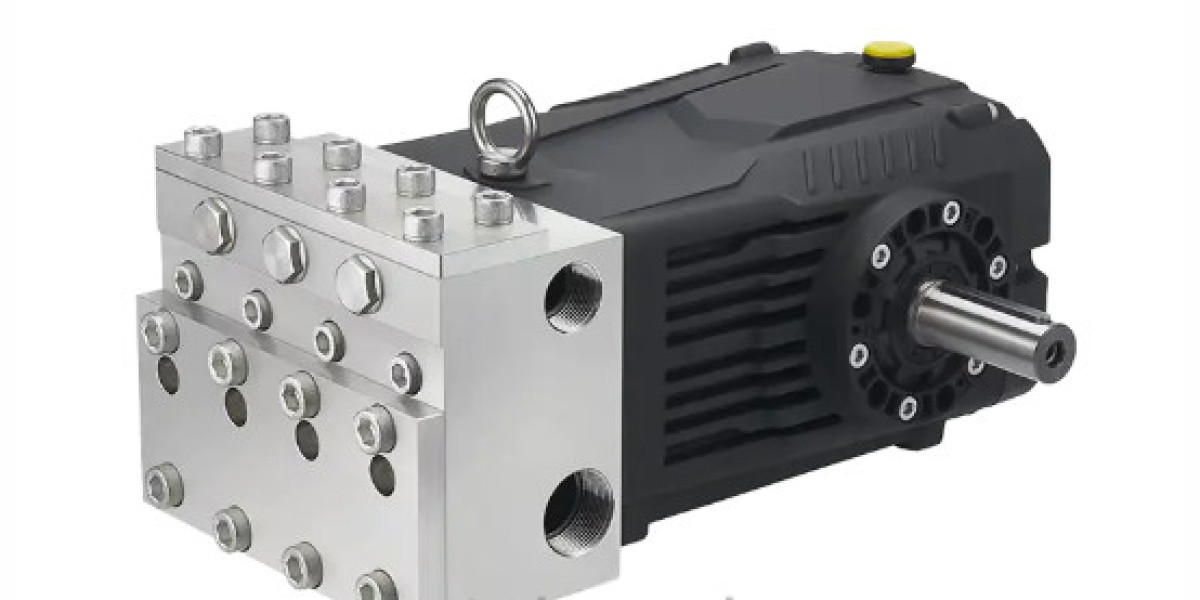

Industrial processes that require controlled liquid delivery at elevated pressures often use positive displacement technology. A Plunger Pump creates flow through the reciprocating movement of a solid cylindrical plunger within a pumping assembly. As the plunger retracts, liquid enters the working chamber through an inlet valve. As it advances, the liquid is displaced through a discharge valve. This operating principle makes the design suitable for a range of industrial pressure applications when the equipment is correctly matched to the fluid and system requirements.
Unlike equipment that relies primarily on centrifugal force, a reciprocating positive displacement design moves liquid through a defined mechanical cycle. The amount delivered is related to displacement per stroke and the number of strokes per unit of time. Actual delivery may be affected by internal leakage, valve performance, liquid compressibility, operating speed, and other system conditions. For this reason, buyers should review rated flow data together with the pressure range and the conditions under which performance is specified.
The plunger is one of the central components in this design. It moves repeatedly through a sealing assembly, while the surrounding fluid-end structure forms the pressure chamber. The plunger surface, seal arrangement, guide components, and alignment all influence operating performance. A suitable surface finish and compatible materials help limit wear and support effective sealing. The specific material requirements depend on the liquid, temperature, pressure, and operating environment.
Sealing is particularly important because the plunger moves through the pressure boundary during operation. The packing or seal assembly is designed to control leakage around the moving component. Its performance is influenced by pressure, speed, temperature, liquid chemistry, and the presence of abrasive particles. Seals are wear components and may require periodic adjustment or replacement according to the equipment design. Maintenance planning should account for the actual operating conditions rather than assuming that all applications have the same service interval.
Inlet and discharge valves work with the reciprocating motion to control liquid movement. During the suction stage, the inlet valve allows liquid to enter the chamber. During the discharge stage, the outlet valve opens as the liquid is forced into the discharge line. These valves must respond consistently to pressure changes. Contamination, corrosion, mechanical wear, or incorrect installation can interfere with valve operation and reduce efficiency. Selecting appropriate valve materials is therefore part of the overall fluid compatibility assessment.
Pressure and flow requirements should be established before selecting a model. The required pressure depends on process resistance, delivery distance, nozzle or equipment requirements, and other connected components. Flow demand is determined by the volume of liquid needed by the process over a given period. Equipment that meets the pressure requirement but cannot deliver enough liquid may fail to support production. Conversely, a unit selected with excessive capacity may require unnecessary power or additional flow-control measures.
Some reciprocating designs use multiple pumping elements to improve delivery characteristics. A triplex arrangement, for example, uses three plungers operating in coordinated cycles. This configuration distributes individual discharge events over the mechanical cycle and can reduce flow variation compared with a single-element arrangement. The degree of pulsation depends on the construction and operating conditions. Where smoother flow is required, system designers may also evaluate pulsation dampeners or other suitable accessories.
Material selection should reflect the liquid being handled. Clean water, treated water, cleaning fluids, and industrial process liquids can impose different requirements on wetted components. Corrosion resistance may be important when the liquid contains chemicals, while wear resistance becomes relevant where suspended particles are present. Stainless steel may be considered for some applications, but it is not automatically suitable for every fluid or operating condition. The compatibility of all wetted components, including valves and seals, should be reviewed.
The drive mechanism converts motor rotation into reciprocating movement. In many industrial designs, a crankshaft and connecting-rod arrangement produces the required motion. Motor power and operating speed should be selected according to the required pressure and delivery rate. Excessive speed can increase mechanical loading and wear, while insufficient drive capacity may prevent the equipment from reaching its intended operating point. Electrical supply, transmission arrangement, and control requirements should be included in the equipment specification.
Correct installation supports stable operation. The suction line should provide an adequate liquid supply with minimal unnecessary resistance. Pipe dimensions, inlet pressure, fluid temperature, and filtration arrangements should be checked. Air entering the suction line can interfere with chamber filling and contribute to unstable output. On the discharge side, all pipes and fittings must be suitable for the intended pressure. Positive displacement systems should also include appropriate pressure protection to prevent dangerous pressure increases if the outlet is blocked.
Operators should monitor the equipment during normal service. Leakage around the plunger, unusual vibration, changes in noise, elevated temperature, and irregular discharge pressure may indicate wear or a developing system problem. Routine maintenance generally involves checking seals, valves, lubrication, fasteners, and drive components. The exact inspection schedule depends on the manufacturer's recommendations, operating hours, liquid quality, and pressure conditions. Keeping maintenance records helps identify patterns and plan service work before a failure interrupts production.
For procurement teams, a complete specification should include the required pressure, flow rate, liquid composition, operating temperature, duty cycle, drive requirements, and installation dimensions. Buyers should also clarify spare-parts availability, service documentation, and any special material requirements. When replacing existing equipment, checking mounting dimensions and pipe connections can prevent installation delays.
A suitable model is selected by considering the entire process rather than one performance figure. Reviewing the fluid, operating conditions, mechanical design, installation arrangement, and maintenance plan helps buyers identify equipment that fits their application. FEIKE's industrial pumping products can be reviewed at https://www.triplex-plungerpump.com/product/pumps/ for users comparing solutions for pressure-driven fluid handling. A Plunger Pump should be specified with careful attention to pressure, displacement, sealing requirements, and liquid compatibility.