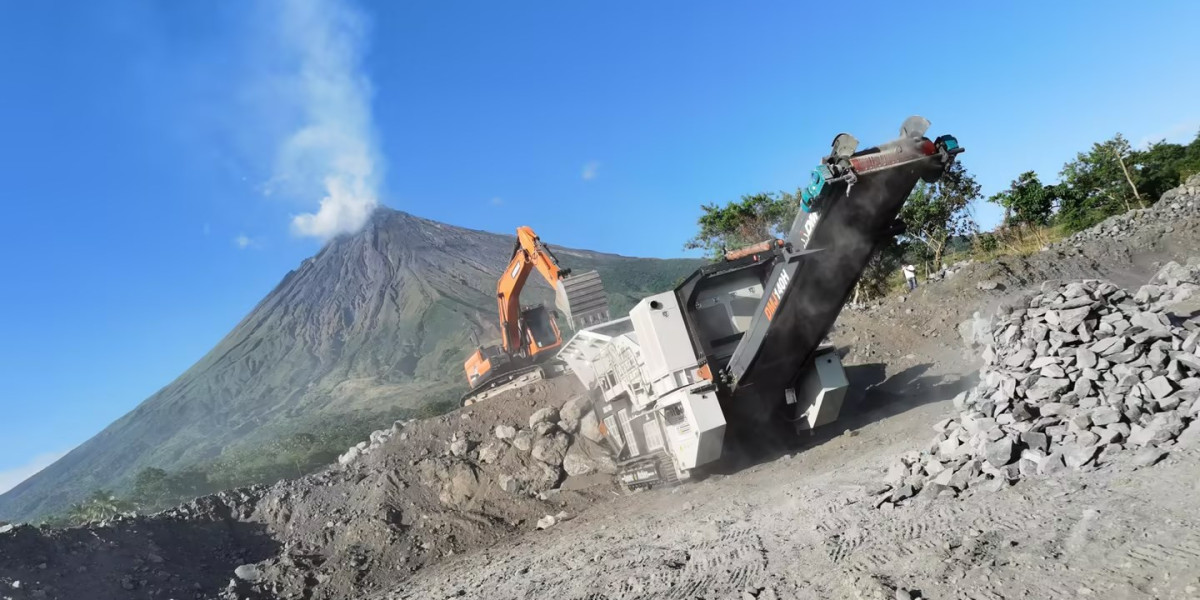

In quarrying, mining, construction, and recycling operations, a Crushing Plant provides an integrated solution for converting raw materials into aggregates with different particle sizes. Rather than relying on a single machine, a complete processing line combines feeding, crushing, screening, and conveying equipment. Each stage performs a specific function, and the coordination between these stages influences production stability, material quality, and overall operating efficiency.
The process generally begins with raw material feeding. Extracted rock, blasted stone, or collected construction waste is transferred to a feeder that controls the supply entering the primary crushing equipment. Consistent feeding helps prevent sudden changes in machine loading and supports a more predictable production process. Depending on the material and site conditions, a vibrating feeder or another suitable feeding arrangement may be selected. Material preparation is also important because excessive soil, oversized pieces, and unwanted foreign objects can interrupt normal operation.
Primary crushing reduces large pieces of raw material into smaller fragments that can be handled by subsequent equipment. Jaw crushers are commonly used for this stage because their compression-based working principle is suitable for many types of hard rock. The size of the feed opening, crushing chamber arrangement, and material characteristics all influence equipment selection. A suitable primary crushing configuration establishes the foundation for the rest of the production line.
Secondary and tertiary crushing provide additional material reduction when smaller or more controlled aggregate sizes are required. Cone crushers are frequently used for processing hard and abrasive materials, while impact crushers may be suitable for certain applications where particle shape is an important consideration. The selection should reflect the physical properties of the raw material, the required product grading, and the relationship between each processing stage. An appropriate equipment combination helps avoid unnecessary circulation and excessive loading.
Screening separates crushed material into different size fractions. Vibrating screens are commonly used to classify aggregates according to project requirements. Material that meets the specified size range can be transferred to storage, while oversized particles may return to a crushing stage for further processing. Screen performance depends on factors such as mesh selection, feed distribution, moisture content, and particle characteristics. Proper screening arrangements help maintain product consistency and make better use of the processed material.
Conveying equipment connects the individual machines and moves materials throughout the production line. Conveyor belts transport raw or processed aggregates between crushing stages, screening units, and stockpiles. Their layout should account for transfer distances, elevation changes, loading points, and available maintenance space. Poorly arranged transfer points can lead to material spillage, dust generation, and unnecessary interruptions. Suitable belt alignment, tension adjustment, and regular inspection help maintain reliable material movement.
Raw material properties have a significant influence on the complete system design. Granite and basalt are generally hard and abrasive, while limestone has different crushing and wear characteristics. River stone may contain rounded particles and varying material compositions. Recycled concrete can include steel, wood, and other unwanted materials that require suitable separation before crushing. Evaluating feed characteristics helps determine the crushing mechanism, wear components, screening arrangement, and necessary material preparation procedures.
Production requirements should also guide equipment configuration. Some projects need several aggregate grades for concrete, asphalt, drainage, or road construction. Others may focus on a smaller range of products for a specific application. The system should be planned around the expected feed volume, required output characteristics, available site area, and stockpile arrangement. Equipment capacity should be reasonably coordinated so that one stage does not consistently restrict the performance of the others.
Maintenance is essential for keeping the processing line in suitable working condition. Crushing liners, jaw plates, blow bars, screen meshes, conveyor belts, bearings, and drive components are exposed to continuous mechanical stress. Regular inspection can identify wear, loose connections, abnormal vibration, and signs of material buildup. Lubrication and replacement schedules should follow equipment requirements and actual operating conditions. Accessible service points and organized spare-part management can help maintenance teams respond more efficiently when attention is needed.
Safety and environmental management should be incorporated into the production layout. Guards, emergency stops, protective covers, and clearly defined access routes help reduce risks around moving equipment. Dust suppression systems can help control airborne particles generated during feeding, crushing, and conveying. Noise management, vehicle movement planning, and appropriate working procedures also contribute to better site organization. Operators should receive training in equipment controls, inspection routines, and emergency response procedures.
A properly configured Crushing Plant depends on the coordination of equipment, material characteristics, site conditions, and production objectives. Reviewing these factors before installation helps businesses select a practical arrangement and plan for long-term maintenance. A balanced processing line can support consistent aggregate production while improving the organization of material handling. For further information about stationary crushing equipment and system configurations, visit https://www.dmcrushers.com/product/stationary-crusher/ when evaluating solutions for a specific project.